Word Explanation
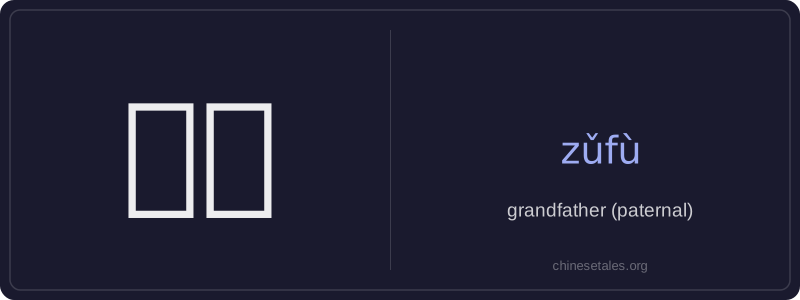
祖父 (zǔfù) means 'grandfather' specifically on the father’s side — that is, the father of one’s father. The character 祖 (zǔ) means 'ancestor' or 'forefather', emphasizing lineage and seniority in the family hierarchy, while 父 (fù) means 'father'. Together, they literally convey 'father’s father', making this term precise and formal. It is commonly used in respectful speech, written contexts, family introductions, and official documents.
Unlike the more general term 爷爷 (yéye), which is informal and can refer to either paternal or maternal grandfather depending on regional usage, 祖父 is unambiguous and always paternal. It appears frequently in genealogical discussions, historical narratives, and formal family trees. While not archaic, it carries a slightly traditional or solemn tone, so learners should use it appropriately — for example, when speaking formally about relatives or filling out forms requiring precise kinship terms.
Example Sentences
Related Words
国语
‘Guó yǔ’ literally means 'national language'—
面条
‘面条’ (miàn tiáo) literally means ‘flour str
无论谁
‘无论谁’ (wú lùn shéi) is a pronoun meaning
背后
背后 literally means 'back + behind' and functions
外语
‘外语’ literally means ‘outside language’ —
认同
‘认同’ (tóng rèn) is a verb meaning ‘to ident
中学
'Zhōngxué' literally combines 'zhōng' (middle)
见面
见面 literally means 'see face' — combining 见 (t