Word Explanation
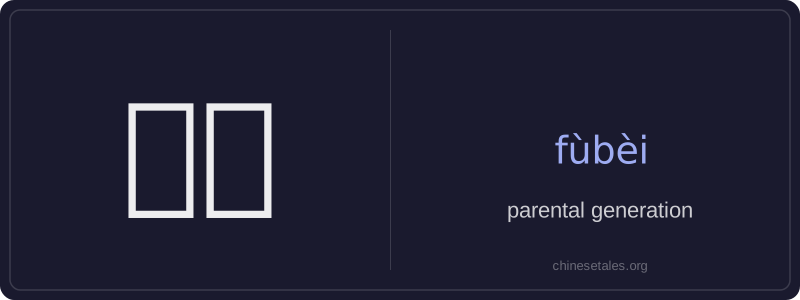
‘父辈’ literally combines ‘父’ (fù), meaning ‘father,’ and ‘辈’ (bèi), meaning ‘generation’ or ‘age group.’ Together, it refers broadly to the generation of one’s parents — including both fathers and mothers, as well as their siblings (e.g., uncles, aunts) — especially when viewed collectively as elders who shaped family values, traditions, or socioeconomic conditions. It is not limited to biological fathers but denotes the parental generation as a social and historical cohort.
This term is commonly used in discussions about intergenerational differences, family history, social change, or cultural transmission. It often appears in formal writing, interviews, and academic contexts — for example, when comparing educational opportunities or work ethics across generations. Unlike ‘父母’ (fùmǔ, ‘parents’), which refers specifically to one’s own mother and father, ‘父辈’ carries a more collective, generational connotation and may include extended family members of that age group.
Example Sentences
Related Words
国语
‘Guó yǔ’ literally means 'national language'—
面条
‘面条’ (miàn tiáo) literally means ‘flour str
无论谁
‘无论谁’ (wú lùn shéi) is a pronoun meaning
背后
背后 literally means 'back + behind' and functions
外语
‘外语’ literally means ‘outside language’ —
认同
‘认同’ (tóng rèn) is a verb meaning ‘to ident
中学
'Zhōngxué' literally combines 'zhōng' (middle)
见面
见面 literally means 'see face' — combining 见 (t