Word Explanation
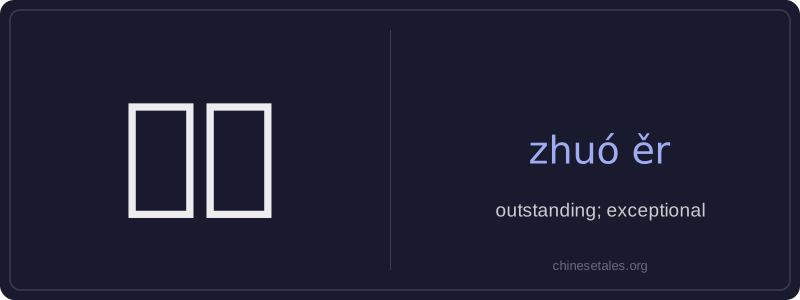
卓尔 (zhuó ěr) is a literary and formal adjective meaning 'outstanding' or 'exceptional', often used to describe someone or something that stands far above the ordinary—like a person of remarkable talent, virtue, or achievement. The character 卓 (zhuó) originally meant 'high' or 'lofty' (as in a tall mountain), suggesting prominence and excellence; 尔 (ěr) functions here as a classical grammatical particle that intensifies or completes the sense, lending elegance and weight. Together, they evoke an image of singular distinction—like a solitary peak rising above a range.
This term appears frequently in written Chinese—especially in biographies, award citations, academic praise, or formal speeches—but is rarely used in casual speech. It carries a respectful, almost reverent tone and is often paired with nouns like 人物 (rénwù, 'person'), 风采 (fēngcǎi, 'demeanor'), or 成就 (chéngjiù, 'achievement'). Because of its classical flavor, 卓尔 sounds more refined and emphatic than common synonyms like 优秀 (yōuxiù) or 杰出 (jiéchū).
Example Sentences
Related Words
国语
‘Guó yǔ’ literally means 'national language'—
面条
‘面条’ (miàn tiáo) literally means ‘flour str
无论谁
‘无论谁’ (wú lùn shéi) is a pronoun meaning
背后
背后 literally means 'back + behind' and functions
外语
‘外语’ literally means ‘outside language’ —
认同
‘认同’ (tóng rèn) is a verb meaning ‘to ident
中学
'Zhōngxué' literally combines 'zhōng' (middle)
见面
见面 literally means 'see face' — combining 见 (t