Word Explanation
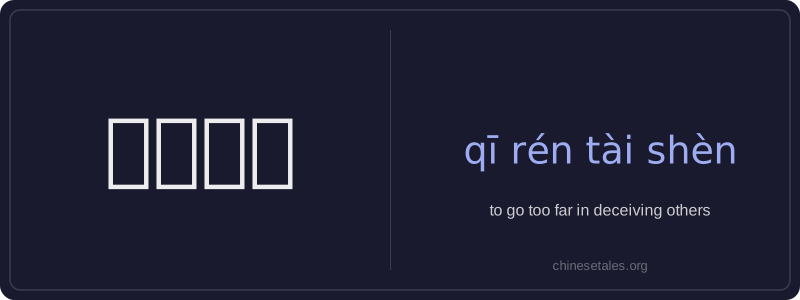
‘欺人太甚’ is an idiomatic four-character expression meaning 'to go too far in deceiving or bullying others' — it conveys strong disapproval and moral outrage. Literally, 欺 means 'to deceive or bully', 人 means 'people', 太 means 'excessively', and 甚 means 'to an extreme degree'. Together, they form a compact, emphatic judgment that someone’s deceitful or oppressive behavior has crossed an unacceptable line. It’s often used in spoken and written Chinese to express indignation when someone acts with blatant dishonesty, arrogance, or injustice.
This phrase functions as a predicate or verbal phrase, typically appearing after the subject (e.g., '他这样做欺人太甚') and frequently followed by a reaction like '令人愤怒' or '不能容忍'. While not formal in bureaucratic contexts, it’s common in everyday criticism, media commentary, and online discourse — especially when highlighting hypocrisy, exploitation, or abuse of power. It carries emotional weight and implies shared ethical expectations among listeners.
Example Sentences
Related Words
国语
‘Guó yǔ’ literally means 'national language'—
面条
‘面条’ (miàn tiáo) literally means ‘flour str
无论谁
‘无论谁’ (wú lùn shéi) is a pronoun meaning
背后
背后 literally means 'back + behind' and functions
外语
‘外语’ literally means ‘outside language’ —
认同
‘认同’ (tóng rèn) is a verb meaning ‘to ident
中学
'Zhōngxué' literally combines 'zhōng' (middle)
见面
见面 literally means 'see face' — combining 见 (t