Word Explanation
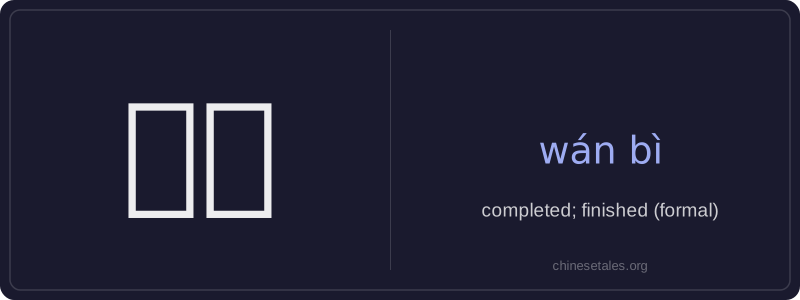
完毕 is a formal, written adjective meaning 'completed' or 'finished'. It combines 完 (wán), meaning 'complete' or 'entire', and 毕 (bì), meaning 'ended' or 'concluded' — together they reinforce the sense of full completion. Unlike colloquial terms like 完了 (wán le) or 结束 (jiéshù), 完毕 carries an official, procedural tone and is common in announcements, reports, work logs, and administrative contexts.
You’ll often see it after verbs in the structure [Verb] + 完毕 (e.g., 测试完毕, 'testing completed'), or used predicatively with 是 or 了 (e.g., 任务已经完毕, 'the task has been completed'). It’s rarely used in casual speech — native speakers typically choose simpler alternatives when chatting with friends or family. Its formality makes it especially frequent in workplaces, education, and official documentation.
Example Sentences
Related Words
国语
‘Guó yǔ’ literally means 'national language'—
面条
‘面条’ (miàn tiáo) literally means ‘flour str
无论谁
‘无论谁’ (wú lùn shéi) is a pronoun meaning
背后
背后 literally means 'back + behind' and functions
外语
‘外语’ literally means ‘outside language’ —
认同
‘认同’ (tóng rèn) is a verb meaning ‘to ident
中学
'Zhōngxué' literally combines 'zhōng' (middle)
见面
见面 literally means 'see face' — combining 见 (t