Word Explanation
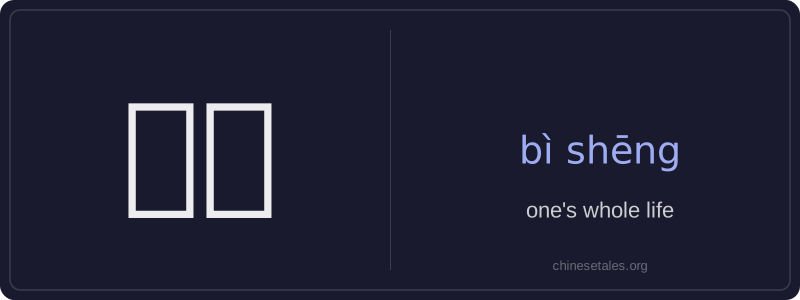
毕生 means 'one's whole life' or 'a lifetime' — it emphasizes the entirety of a person’s lifespan, often with a sense of dedication, culmination, or lifelong pursuit. The character 毕 (bì) means 'to finish' or 'to complete', while 生 (shēng) means 'life' or 'birth'; together, they literally convey 'life completed' — not in a morbid sense, but rather 'the full span of one’s life'. It is commonly used in formal, literary, or respectful contexts, especially when describing lifelong efforts, achievements, or commitments.
This term frequently appears in phrases like 毕生精力 (lifelong energy/effort), 毕生事业 (lifelong career), or 毕生追求 (lifelong pursuit). It carries a dignified, earnest tone and is rarely used in casual speech. While grammatically a noun, 毕生 often functions attributively before another noun (e.g., 毕生心血 — 'lifelong devotion'), similar to an adjective in English.
Example Sentences
Related Words
国语
‘Guó yǔ’ literally means 'national language'—
面条
‘面条’ (miàn tiáo) literally means ‘flour str
无论谁
‘无论谁’ (wú lùn shéi) is a pronoun meaning
背后
背后 literally means 'back + behind' and functions
外语
‘外语’ literally means ‘outside language’ —
认同
‘认同’ (tóng rèn) is a verb meaning ‘to ident
中学
'Zhōngxué' literally combines 'zhōng' (middle)
见面
见面 literally means 'see face' — combining 见 (t