Word Explanation
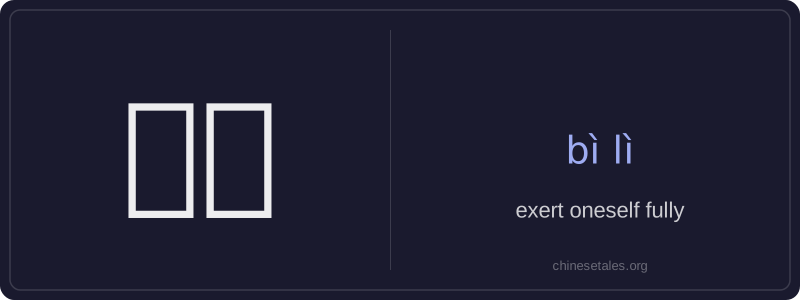
毕力 (bì lì) is a formal literary verb meaning 'to exert oneself fully' or 'to spare no effort'. The character 毕 (bì) means 'to complete' or 'to exhaust', while 力 (lì) means 'strength' or 'effort'; together, they convey the idea of exhausting one’s entire strength to accomplish something. This term carries a strong connotation of dedication, perseverance, and wholehearted commitment.
It is commonly used in written Chinese—especially in essays, speeches, official documents, or motivational contexts—and less frequent in casual spoken conversation. 毕力 often appears with verbs like 投入 (tou1ru4, 'to devote'), 贡献 (gong4xian4, 'to contribute'), or 奋斗 (fen4dou4, 'to strive'), and typically modifies actions requiring sustained intensity and moral resolve, such as studying, serving society, or overcoming hardship.
Example Sentences
Related Words
国语
‘Guó yǔ’ literally means 'national language'—
面条
‘面条’ (miàn tiáo) literally means ‘flour str
无论谁
‘无论谁’ (wú lùn shéi) is a pronoun meaning
背后
背后 literally means 'back + behind' and functions
外语
‘外语’ literally means ‘outside language’ —
认同
‘认同’ (tóng rèn) is a verb meaning ‘to ident
中学
'Zhōngxué' literally combines 'zhōng' (middle)
见面
见面 literally means 'see face' — combining 见 (t