Word Explanation
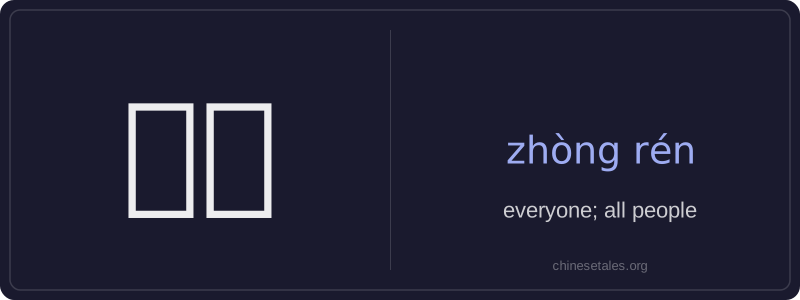
众人 literally combines 众 (zhòng), meaning 'many' or 'multitude', and 人 (rén), meaning 'person' or 'people'. Together, they form a collective noun meaning 'everyone', 'all people', or 'the general public'. Unlike the more casual 人们 (rénmen) or the formal 大家 (dàjiā), 众人 carries a slightly literary or classical tone — it’s often used in written Chinese, proverbs, historical narratives, or formal speeches to refer to an undifferentiated group of people as a whole.
This term emphasizes inclusivity and breadth rather than individuality; it rarely appears in casual daily conversation but is common in idioms like 众人拾柴火焰高 (When everyone adds firewood, the flame burns high — 'Unity brings strength'). It can also appear in news reports or official statements to refer to the public at large, especially when highlighting shared experience or collective action.
Example Sentences
Related Words
国语
‘Guó yǔ’ literally means 'national language'—
面条
‘面条’ (miàn tiáo) literally means ‘flour str
无论谁
‘无论谁’ (wú lùn shéi) is a pronoun meaning
背后
背后 literally means 'back + behind' and functions
外语
‘外语’ literally means ‘outside language’ —
认同
‘认同’ (tóng rèn) is a verb meaning ‘to ident
中学
'Zhōngxué' literally combines 'zhōng' (middle)
见面
见面 literally means 'see face' — combining 见 (t