Word Explanation
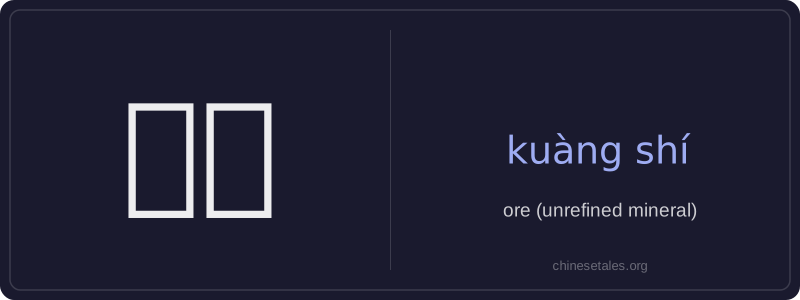
'矿石' (kuàng shí) literally combines '矿' (kuàng), meaning 'mine' or 'mineral deposit', and '石' (shí), meaning 'stone' or 'rock'. Together, they refer specifically to naturally occurring rock or sediment that contains valuable minerals—especially metals like iron, copper, or gold—in concentrations high enough to make extraction economically viable. Unlike ordinary rocks, ore must contain extractable elements in usable form and quantity.
This term is used almost exclusively in geological, industrial, and technical contexts—not in daily conversation. You’ll encounter it in discussions about mining, metallurgy, resource management, or environmental science. It’s a formal, uncountable noun; native speakers typically say '一块矿石' (a piece of ore) or '各种矿石' (various types of ore) when quantifying it. Note that '矿石' never refers to refined metal—it only describes the raw, unprocessed material extracted from the earth.
Example Sentences
Related Words
国语
‘Guó yǔ’ literally means 'national language'—
面条
‘面条’ (miàn tiáo) literally means ‘flour str
无论谁
‘无论谁’ (wú lùn shéi) is a pronoun meaning
背后
背后 literally means 'back + behind' and functions
外语
‘外语’ literally means ‘outside language’ —
认同
‘认同’ (tóng rèn) is a verb meaning ‘to ident
中学
'Zhōngxué' literally combines 'zhōng' (middle)
见面
见面 literally means 'see face' — combining 见 (t