Word Explanation
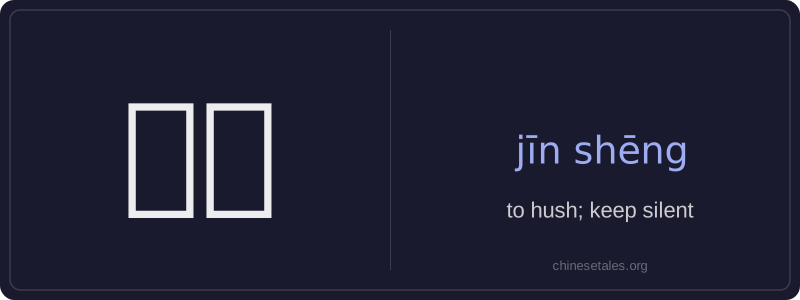
禁声 is a verb meaning 'to hush' or 'to keep silent', literally combining 禁 (to forbid, to prohibit) and 声 (sound, voice). It emphasizes the active suppression of noise — not just personal silence, but enforcing quietness in a shared space. The word carries a formal or authoritative tone, often used when someone in charge (a teacher, librarian, or parent) instructs others to stop talking or making noise.
It’s commonly heard in settings where quiet is required: classrooms before an exam, libraries, hospitals, or during solemn ceremonies. Unlike the more neutral 沉默 (silence) or the casual 小声点 (speak softly), 禁声 implies an order or rule — it’s prescriptive, not descriptive. The verb can be used transitively (e.g., 禁声大家) or intransitively (e.g., 请大家禁声), though the latter is more frequent in imperative contexts.
Example Sentences
Related Words
国语
‘Guó yǔ’ literally means 'national language'—
面条
‘面条’ (miàn tiáo) literally means ‘flour str
无论谁
‘无论谁’ (wú lùn shéi) is a pronoun meaning
背后
背后 literally means 'back + behind' and functions
外语
‘外语’ literally means ‘outside language’ —
认同
‘认同’ (tóng rèn) is a verb meaning ‘to ident
中学
'Zhōngxué' literally combines 'zhōng' (middle)
见面
见面 literally means 'see face' — combining 见 (t