Word Explanation
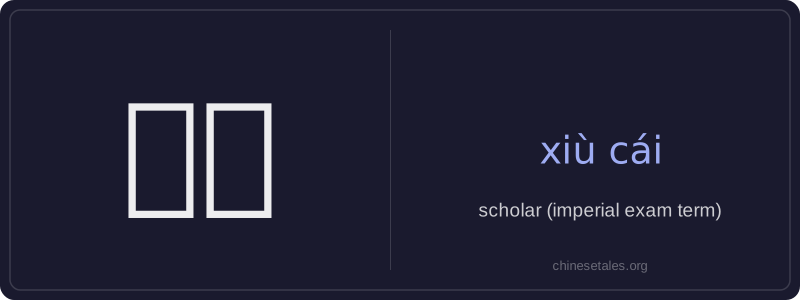
‘秀才’ (xiù cái) was the lowest official degree in China’s imperial civil service examination system, awarded to candidates who passed the preliminary county- or prefecture-level exams. Literally, ‘秀’ means ‘outstanding’ or ‘excellent’, and ‘才’ means ‘talent’ or ‘scholarly ability’—together they signify an ‘outstanding talent’ recognized by scholarly merit. Historically, a ‘秀才’ enjoyed certain legal privileges and social prestige, though the title alone did not guarantee government office.
Today, ‘秀才’ is used mostly in historical contexts, literature, or idiomatic expressions to evoke traditional Confucian scholarship. It appears in phrases like ‘秀才不出门,能知天下事’ (‘A scholar need not leave his room to know all under heaven’), highlighting classical learning and book-based knowledge. While no longer an active academic rank, it remains a culturally resonant term for learned, literate individuals—especially when referencing pre-modern China.
Example Sentences
Related Words
国语
‘Guó yǔ’ literally means 'national language'—
面条
‘面条’ (miàn tiáo) literally means ‘flour str
无论谁
‘无论谁’ (wú lùn shéi) is a pronoun meaning
背后
背后 literally means 'back + behind' and functions
外语
‘外语’ literally means ‘outside language’ —
认同
‘认同’ (tóng rèn) is a verb meaning ‘to ident
中学
'Zhōngxué' literally combines 'zhōng' (middle)
见面
见面 literally means 'see face' — combining 见 (t