Word Explanation
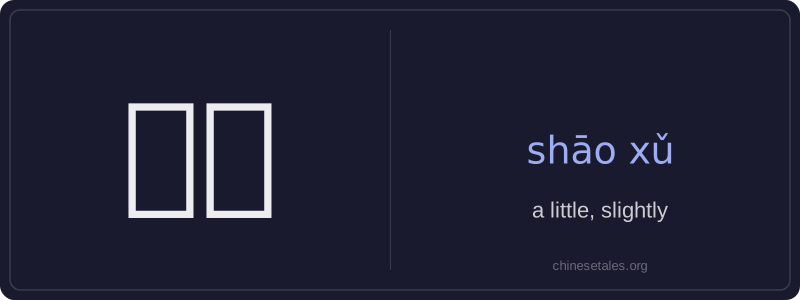
稍许 is an adverb meaning 'a little' or 'slightly', used to indicate a small degree or amount. It combines 稍 (shāo), which means 'a little' or 'somewhat', and 许 (xǔ), which in this context functions as a classical particle reinforcing the sense of modest quantity — together, they form a fixed, literary-leaning expression that softens statements without sounding vague.
This word is commonly used in spoken and written Chinese to express mild intensity — for example, when describing slight changes in emotion (e.g., feeling slightly tired), minor adjustments (e.g., lowering volume a little), or subtle differences (e.g., a slightly higher price). It often appears before verbs or adjectives and carries a polite, restrained tone, making it suitable for formal or thoughtful speech — though it’s also natural in everyday conversation among educated speakers.
Example Sentences
Related Words
国语
‘Guó yǔ’ literally means 'national language'—
面条
‘面条’ (miàn tiáo) literally means ‘flour str
认同
‘认同’ (tóng rèn) is a verb meaning ‘to ident
无论谁
‘无论谁’ (wú lùn shéi) is a pronoun meaning
背后
背后 literally means 'back + behind' and functions
外语
‘外语’ literally means ‘outside language’ —
中学
'Zhōngxué' literally combines 'zhōng' (middle)
见面
见面 literally means 'see face' — combining 见 (t