Word Explanation
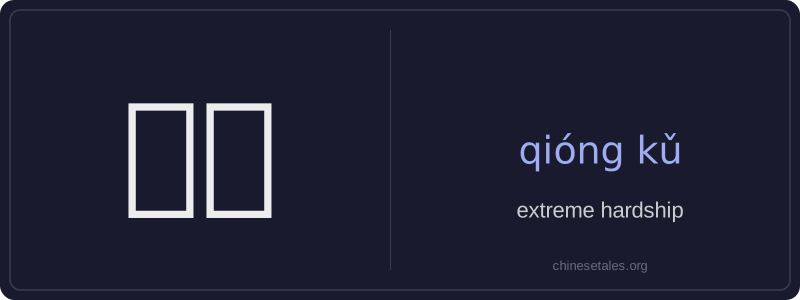
穷苦 (qióng kǔ) is an adjective describing a state of extreme hardship, typically involving both severe poverty and deep suffering. The character 穷 means 'poor' or 'destitute', emphasizing lack of material resources, while 苦 means 'bitter', 'hard', or 'suffering', referring to emotional or physical distress. Together, they form a compound that conveys more than just financial scarcity—it implies enduring, multifaceted hardship affecting one’s dignity, health, and daily life.
This term is commonly used in formal, literary, or empathetic contexts—such as historical narratives, social commentary, or humanitarian reports—to describe marginalized groups like rural laborers, refugees, or elderly people living without support. It carries a strong connotation of helplessness and long-term adversity, and is rarely used lightly or humorously. While it can modify nouns directly (e.g., 穷苦人家), it often appears in descriptive phrases or as a subject complement after 是 or 感到.
Example Sentences
Related Words
国语
‘Guó yǔ’ literally means 'national language'—
面条
‘面条’ (miàn tiáo) literally means ‘flour str
外语
‘外语’ literally means ‘outside language’ —
认同
‘认同’ (tóng rèn) is a verb meaning ‘to ident
无论谁
‘无论谁’ (wú lùn shéi) is a pronoun meaning
背后
背后 literally means 'back + behind' and functions
认为
‘认为’ (rèn wéi) is a transitive verb meaning
不对
不对 (bù duì) literally combines 不 (bù), meani