Word Explanation
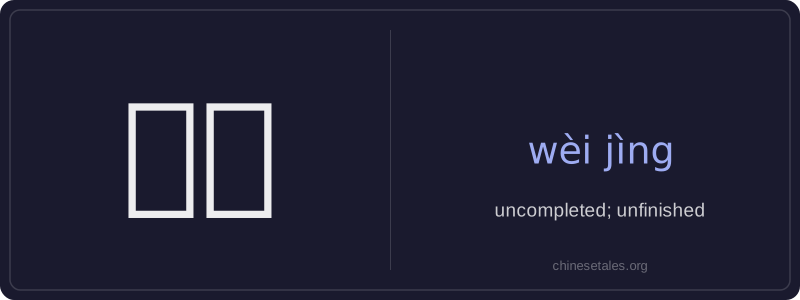
‘未竟’ is a formal literary adjective meaning ‘uncompleted’ or ‘unfinished’, typically describing tasks, goals, projects, or endeavors that have not yet reached completion. The character 未 means ‘not yet’, while 竟 means ‘to finish’ or ‘to reach the end’—together, they literally convey ‘not yet finished’. It carries a tone of solemnity or regret, often implying something important was left undone due to circumstance, time constraints, or unexpected interruption.
This word is rarely used in casual speech and appears most often in written Chinese—especially in essays, obituaries, historical accounts, or reflective narratives. It commonly modifies nouns like 事业 (career), 事业 (cause), 志向 (aspiration), or 遗愿 (last wish). Because of its elevated register, it’s inappropriate in everyday contexts like texting or chatting with friends; learners should reserve it for formal writing or solemn spoken remarks.
Example Sentences
Related Words
国语
‘Guó yǔ’ literally means 'national language'—
面条
‘面条’ (miàn tiáo) literally means ‘flour str
外语
‘外语’ literally means ‘outside language’ —
认同
‘认同’ (tóng rèn) is a verb meaning ‘to ident
无论谁
‘无论谁’ (wú lùn shéi) is a pronoun meaning
背后
背后 literally means 'back + behind' and functions
认为
‘认为’ (rèn wéi) is a transitive verb meaning
不对
不对 (bù duì) literally combines 不 (bù), meani