Word Explanation
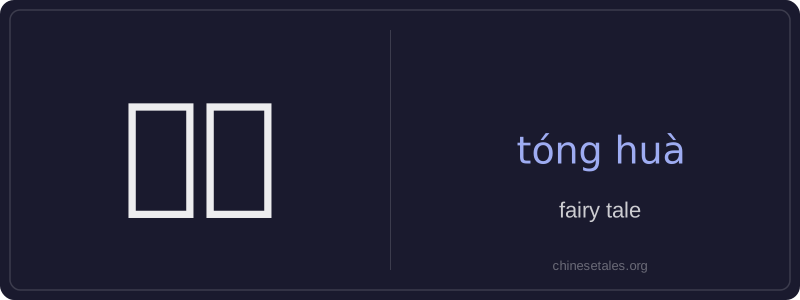
‘童话’ (tóng huà) literally combines ‘童’ (tóng), meaning ‘child’ or ‘childhood’, and ‘话’ (huà), meaning ‘story’ or ‘speech’. Together, it refers to a fictional story traditionally intended for children—often featuring magical creatures, talking animals, enchanted settings, and clear moral lessons. These stories frequently include anthropomorphized animals (like clever foxes or kind deer), making them especially relevant to the ‘Animals’ topic.
While many fairy tales originate from oral folk traditions—such as those collected by the Brothers Grimm or Hans Christian Andersen—the Chinese term 童话 also encompasses original modern works like Ye Shengtao’s classic stories. Unlike myths (神话) or legends (传说), 童话 emphasizes imagination over cultural belief or historical grounding, and rarely involves real deities or ancestral figures. It is commonly used in education, publishing, and family storytelling contexts, often appearing in illustrated books, school readers, and animated adaptations.
Example Sentences
Related Words
国语
‘Guó yǔ’ literally means 'national language'—
面条
‘面条’ (miàn tiáo) literally means ‘flour str
无论谁
‘无论谁’ (wú lùn shéi) is a pronoun meaning
外语
‘外语’ literally means ‘outside language’ —
认同
‘认同’ (tóng rèn) is a verb meaning ‘to ident
背后
背后 literally means 'back + behind' and functions
认为
‘认为’ (rèn wéi) is a transitive verb meaning
不对
不对 (bù duì) literally combines 不 (bù), meani