Word Explanation
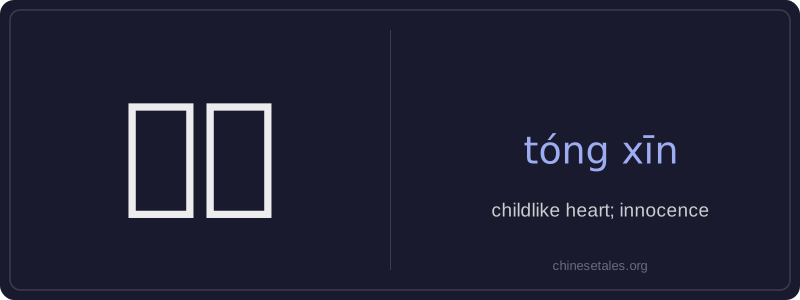
‘Tóng xīn’ literally means ‘child heart’—a compound of 童 (tóng), meaning ‘child’ or ‘youth’, and 心 (xīn), meaning ‘heart’ or ‘mind’. It does not refer to a physical organ but symbolizes the pure, unguarded, imaginative, and trusting inner quality often associated with young children: curiosity without cynicism, wonder without judgment, and sincerity without pretense.
This term is deeply valued in Chinese culture and philosophy, especially in Daoist and Confucian thought, where preserving one’s tóng xīn is seen as essential to authenticity and moral integrity. It appears frequently in literature, art criticism, and education discourse—not as naivety, but as a cultivated state of openness and emotional honesty. Adults are sometimes praised for retaining their tóng xīn despite life’s complexities, suggesting resilience of spirit rather than immaturity.
Example Sentences
Related Words
国语
‘Guó yǔ’ literally means 'national language'—
面条
‘面条’ (miàn tiáo) literally means ‘flour str
无论谁
‘无论谁’ (wú lùn shéi) is a pronoun meaning
外语
‘外语’ literally means ‘outside language’ —
认同
‘认同’ (tóng rèn) is a verb meaning ‘to ident
背后
背后 literally means 'back + behind' and functions
认为
‘认为’ (rèn wéi) is a transitive verb meaning
不对
不对 (bù duì) literally combines 不 (bù), meani