Word Explanation
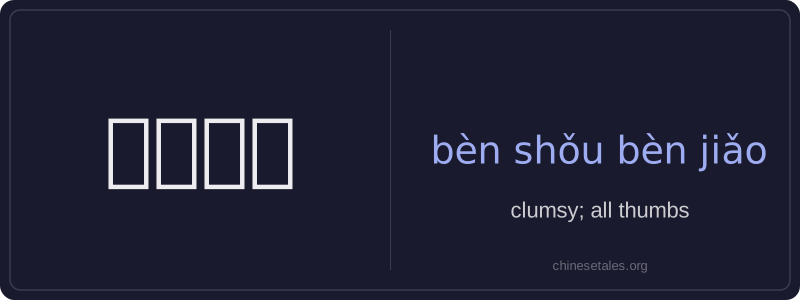
‘笨手笨脚’ is a reduplicative idiomatic expression meaning 'clumsy' or 'all thumbs' — describing someone who lacks physical coordination, especially when handling objects or moving. Literally, it combines ‘bèn’ (stupid, awkward) with ‘shǒu’ (hand) and ‘jiǎo’ (foot), repeating each pair to emphasize the pervasive, full-body nature of the clumsiness. It’s not about intelligence but motor control: dropping things, tripping, fumbling with buttons or tools, or knocking over items while walking.
This phrase is commonly used in informal spoken and written Chinese, often with gentle teasing or sympathy — for example, describing a child learning to tie shoelaces or an adult struggling with new kitchen gadgets. It carries a mild, non-offensive tone; unlike stronger terms like ‘蠢’ (foolish), it focuses on observable physical inelegance rather than judgment of intellect or character.
Example Sentences
Related Words
国语
‘Guó yǔ’ literally means 'national language'—
面条
‘面条’ (miàn tiáo) literally means ‘flour str
无论谁
‘无论谁’ (wú lùn shéi) is a pronoun meaning
背后
背后 literally means 'back + behind' and functions
外语
‘外语’ literally means ‘outside language’ —
认同
‘认同’ (tóng rèn) is a verb meaning ‘to ident
中学
'Zhōngxué' literally combines 'zhōng' (middle)
认为
‘认为’ (rèn wéi) is a transitive verb meaning