嘈
Character Story & Explanation
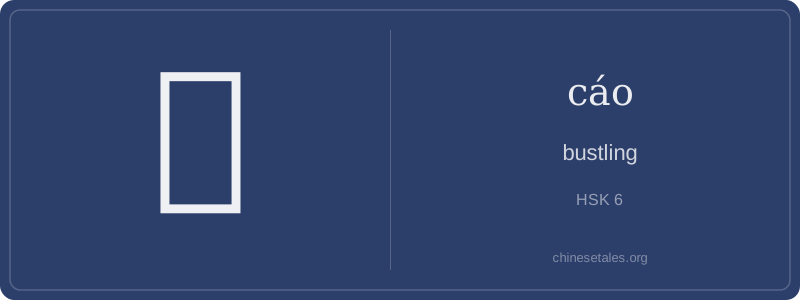
追溯字形,嘈最早见于小篆,由‘口’(kǒu, mouth)和‘曹’(cáo, originally a pictograph of two rice paddies side-by-side, later extended to mean ‘group, batch, officials’)组成。‘曹’本身在甲骨文中像两排整齐的田垄,象征集体与重复;加‘口’后,整个字仿佛一群人在同一空间里同时开口——不是对话,而是叠加发声。十四笔中,右边‘曹’的‘曰’(yue, speaking mouth)被简化为‘曰’加双‘东’(dōng)的变形,暗示方向杂乱、声音四散。
《说文解字》未收‘嘈’,说明它属后起俗字,初见于唐宋口语文献。白居易《琵琶行》虽用‘嘈嘈切切错杂弹’形容琵琶声,但此‘嘈嘈’实为拟声词,非独立语义字;至明清小说如《金瓶梅》,‘嘈杂’才稳定作形容词,专指人声鼎沸、秩序失衡之态。有趣的是,其视觉结构‘口+曹’ mirrors its meaning: mouths multiplied, uncoordinated — a brilliant case of form echoing function across 1,200 years.
At its heart, 嘈 (cáo) isn’t just ‘bustling’ — it’s the *sound* of bustle: a low, overlapping, slightly chaotic hum of many voices or noises at once. Think subway platforms at rush hour, crowded night markets, or a classroom where everyone talks over each other — not joyful chaos, but dense, inescapable auditory clutter. It carries a subtle negative connotation: it’s rarely used to praise liveliness; instead, it hints at sensory overload or lack of control.
Grammatically, 嘈 is almost always found in reduplicated forms — 嘈嘈 (cáo cáo) or 嘈杂 (cáo zá) — and functions as an adjective or adverbial modifier. You’ll rarely see it alone: saying ‘this place is 嘈’ sounds incomplete; it’s ‘嘈杂的环境’ (a noisy, chaotic environment) or ‘人声嘈嘈’ (voices clamoring). Learners often mistakenly use it like English ‘busy’ — but 嘈 never describes activity level (like ‘a busy office’); it exclusively evokes *acoustic density*.
Culturally, this reflects how Chinese perception of space and social harmony prioritizes auditory order: silence isn’t emptiness — it’s respect, focus, or calm; conversely, 嘈 signals a breakdown in that balance. A common error is confusing it with 烦 (fán, ‘annoyed’) or 喧 (xuān, ‘boisterous’), but those describe emotion or tone — 嘈 is purely about layered, indistinct sound. Even in modern tech slang, ‘嘈杂的弹幕’ (cáo zá de dàn mù) — ‘cluttered live-comment streams’ — shows how deeply the character maps onto digital overwhelm.