Word Explanation
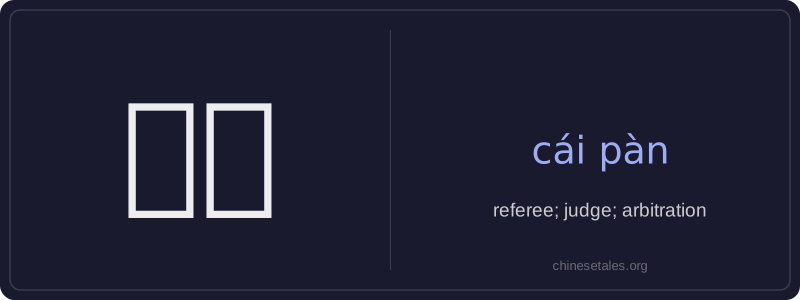
裁判 (cái pàn) is a noun meaning 'referee' or 'judge'—a person who officially oversees and enforces rules during competitions, games, or legal proceedings. The first character 裁 (cái) means 'to cut, decide, or adjudicate', suggesting authority to make final rulings; the second character 判 (pàn) means 'to judge, distinguish, or determine', reinforcing the idea of impartial evaluation. Together, they form a compound that emphasizes formal, rule-based decision-making.
This word is commonly used in sports contexts (e.g., football, basketball), legal settings (e.g., arbitration or court proceedings), and even metaphorically for someone who settles disputes. While it can refer to both sports officials and judicial judges, context determines whether the sense is athletic or legal. It is neutral in register and widely understood across mainland China, Taiwan, and other Mandarin-speaking regions.
Example Sentences
Related Words
国语
‘Guó yǔ’ literally means 'national language'—
无论谁
‘无论谁’ (wú lùn shéi) is a pronoun meaning
外语
‘外语’ literally means ‘outside language’ —
不对
不对 (bù duì) literally combines 不 (bù), meani
违规
违规 (wéi guī) literally means 'to violate rules
亲笔
‘亲笔’ literally means ‘one’s own hand’—comb
我的
我的 (wǒ de) is a possessive pronoun meaning 'my'
面条
‘面条’ (miàn tiáo) literally means ‘flour str