Word Explanation
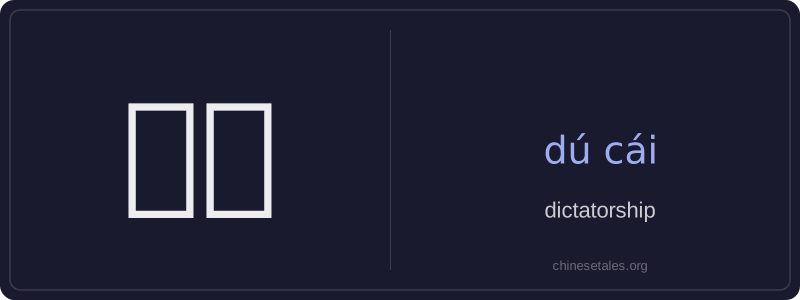
‘独裁’ (dú cái) literally combines 独 (dú), meaning 'alone' or 'sole', and 裁 (cái), meaning 'to decide' or 'to adjudicate'. Together, they form a noun meaning 'dictatorship' — a system of government in which one person or small group holds absolute power, typically without democratic checks or popular consent. The term carries strong negative connotations in modern Chinese usage, implying authoritarianism, suppression of dissent, and lack of political freedom.
It is commonly used in political, historical, and journalistic contexts — for example, when discussing authoritarian regimes, historical figures like Mao Zedong or Chiang Kai-shek (though nuanced analysis is expected), or comparisons of governance models. While technically neutral in classical usage (e.g., ‘独裁专断’ meaning 'arbitrary unilateral decision-making'), contemporary usage almost always implies illegitimacy or abuse of power. It is rarely used to describe legitimate, constitutionally constrained leadership.
Example Sentences
Related Words
国语
‘Guó yǔ’ literally means 'national language'—
无论谁
‘无论谁’ (wú lùn shéi) is a pronoun meaning
外语
‘外语’ literally means ‘outside language’ —
不对
不对 (bù duì) literally combines 不 (bù), meani
违规
违规 (wéi guī) literally means 'to violate rules
亲笔
‘亲笔’ literally means ‘one’s own hand’—comb
我的
我的 (wǒ de) is a possessive pronoun meaning 'my'
面条
‘面条’ (miàn tiáo) literally means ‘flour str