Word Explanation
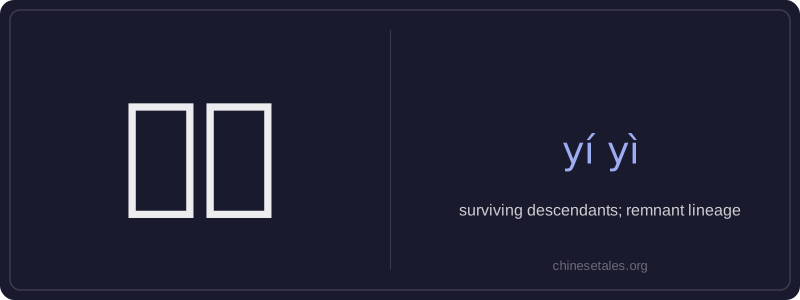
‘遗裔’ literally combines ‘遗’ (yí), meaning ‘left behind, remaining, legacy’, and ‘裔’ (yì), meaning ‘descendants, offspring, lineage’. Together, it refers to the surviving descendants of a group—especially when that group is rare, endangered, or nearly extinct. It carries a formal, literary tone and is often used in scientific, historical, or conservation contexts to emphasize continuity amid loss.
The term implies both biological descent and cultural or genetic inheritance; it’s not used for ordinary family relations but rather for lineages under threat—such as endangered animal species whose few remaining individuals represent the last traces of their ancestral line. It appears frequently in ecology reports, paleontology discussions, and heritage preservation texts, where precision about lineage survival matters more than everyday kinship terms.
Example Sentences
Related Words
国语
‘Guó yǔ’ literally means 'national language'—
无论谁
‘无论谁’ (wú lùn shéi) is a pronoun meaning
外语
‘外语’ literally means ‘outside language’ —
不对
不对 (bù duì) literally combines 不 (bù), meani
违规
违规 (wéi guī) literally means 'to violate rules
亲笔
‘亲笔’ literally means ‘one’s own hand’—comb
我的
我的 (wǒ de) is a possessive pronoun meaning 'my'
面条
‘面条’ (miàn tiáo) literally means ‘flour str