Word Explanation
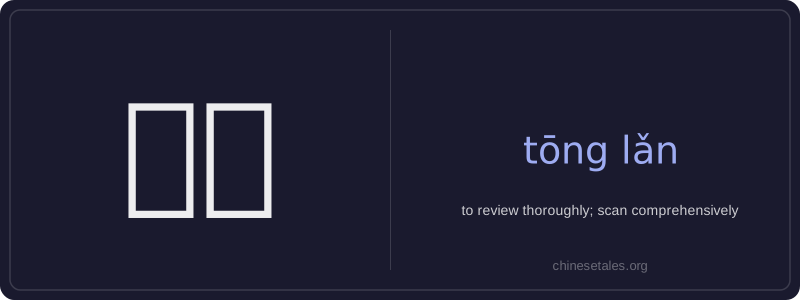
通览 (tōng lǎn) is a formal verb meaning 'to review thoroughly' or 'to scan comprehensively'. It combines 通 (tōng), which conveys 'through', 'comprehensive', or 'all-encompassing', and 览 (lǎn), meaning 'to view' or 'to survey'. Together, they emphasize a complete, systematic examination—not just skimming, but covering the whole scope with attention to overall structure and key points.
This word is commonly used in academic, professional, or editorial contexts: reviewing a manuscript before publication, surveying a report before presentation, or preparing for an exam by going through all study materials. It implies intentionality, breadth, and a certain level of authority or responsibility. While it can appear in spoken Chinese, it's more frequent in written or formal speech—and rarely used for casual or superficial looking (e.g., glancing at a menu). Its tone is neutral-to-formal, never colloquial.
Example Sentences
Related Words
国语
‘Guó yǔ’ literally means 'national language'—
无论谁
‘无论谁’ (wú lùn shéi) is a pronoun meaning
不对
不对 (bù duì) literally combines 不 (bù), meani
外语
‘外语’ literally means ‘outside language’ —
违规
违规 (wéi guī) literally means 'to violate rules
亲笔
‘亲笔’ literally means ‘one’s own hand’—comb
我的
我的 (wǒ de) is a possessive pronoun meaning 'my'
面条
‘面条’ (miàn tiáo) literally means ‘flour str