Word Explanation
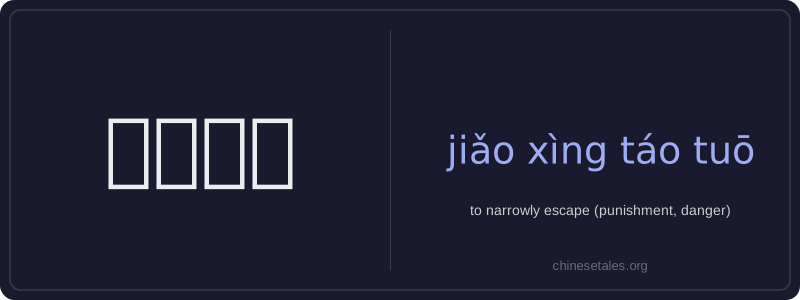
'侥幸逃脱' literally combines 'jiǎo xìng' (to get away with something by luck or chance) and 'táo tuō' (to escape or evade). Together, it means to narrowly avoid punishment, danger, or a negative consequence—not through skill or preparation, but purely due to fortune or an unexpected break. The phrase carries a subtle moral judgment: the subject often deserved the consequence but slipped through the cracks, implying relief mixed with guilt or undeservedness.
This expression is commonly used in contexts involving legal consequences, accidents, health crises, or ethical failures—such as evading arrest after a crime, surviving a serious illness against odds, or avoiding detection for misconduct. It emphasizes the precariousness and randomness of the escape, not the agent’s competence. While grammatically functioning as a verb phrase, it typically appears in past-tense narrative clauses and rarely stands alone as a predicate without context.
Example Sentences
Related Words
国语
‘Guó yǔ’ literally means 'national language'—
无论谁
‘无论谁’ (wú lùn shéi) is a pronoun meaning
外语
‘外语’ literally means ‘outside language’ —
不对
不对 (bù duì) literally combines 不 (bù), meani
我的
我的 (wǒ de) is a possessive pronoun meaning 'my'
违规
违规 (wéi guī) literally means 'to violate rules
亲笔
‘亲笔’ literally means ‘one’s own hand’—comb
面条
‘面条’ (miàn tiáo) literally means ‘flour str