Word Explanation
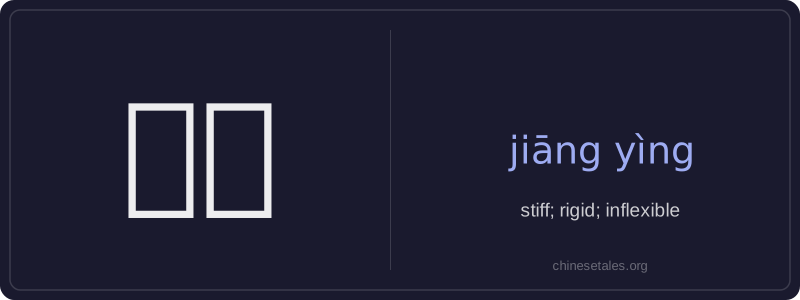
僵硬 (jiāng yìng) is an adjective meaning 'stiff', 'rigid', or 'inflexible'. It combines two characters: 僵 (jiāng), which originally refers to a corpse or something lifeless and motionless, and 硬 (yìng), meaning 'hard' or 'firm'. Together, they emphasize a loss of natural flexibility—whether physical (like muscles after injury or in cold weather) or metaphorical (like rigid thinking or inflexible procedures). The word often carries a slightly negative connotation, suggesting unnatural tension or resistance to change.
It’s commonly used in health-related contexts—for example, describing muscle stiffness after sitting too long or during recovery from illness—but also appears in figurative usage, such as criticizing bureaucratic processes or stiff social interactions. Unlike the neutral 硬 (yìng), 僵硬 implies an undesirable, often uncomfortable rigidity that interferes with normal function or flow.
Example Sentences
Related Words
国语
‘Guó yǔ’ literally means 'national language'—
无论谁
‘无论谁’ (wú lùn shéi) is a pronoun meaning
外语
‘外语’ literally means ‘outside language’ —
不对
不对 (bù duì) literally combines 不 (bù), meani
我的
我的 (wǒ de) is a possessive pronoun meaning 'my'
违规
违规 (wéi guī) literally means 'to violate rules
亲笔
‘亲笔’ literally means ‘one’s own hand’—comb
面条
‘面条’ (miàn tiáo) literally means ‘flour str