Word Explanation
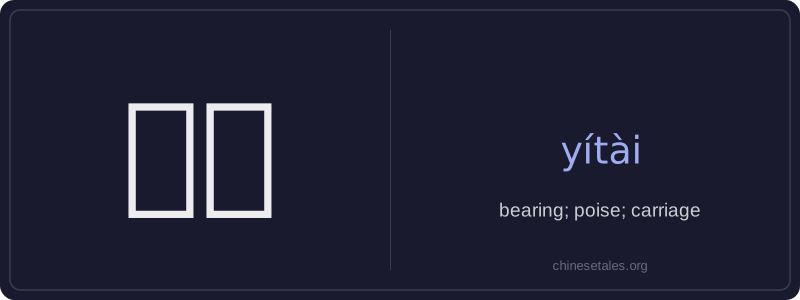
仪态 (yítài) literally combines 仪 (yí), meaning 'ceremony,' 'formality,' or 'demeanor,' and 态 (tài), meaning 'state,' 'manner,' or 'bearing.' Together, they refer to a person’s outward composure — how one carries oneself physically and socially: posture, facial expression, gestures, and overall grace under observation. It emphasizes cultivated, respectful, and self-aware presence, especially in formal or public settings.
This word is commonly used to describe people in professional, diplomatic, or cultural contexts — such as performers, diplomats, teachers, or hosts — where appearance and demeanor communicate respect and competence. Unlike casual terms like 姿势 (zīshì, 'posture') or 表情 (biǎoqíng, 'facial expression'), 仪态 conveys an integrated impression of poise and propriety. It often appears in evaluations, training materials, or advice on etiquette and personal presentation.
Example Sentences
Related Words
国语
‘Guó yǔ’ literally means 'national language'—
无论谁
‘无论谁’ (wú lùn shéi) is a pronoun meaning
外语
‘外语’ literally means ‘outside language’ —
不对
不对 (bù duì) literally combines 不 (bù), meani
我的
我的 (wǒ de) is a possessive pronoun meaning 'my'
违规
违规 (wéi guī) literally means 'to violate rules
亲笔
‘亲笔’ literally means ‘one’s own hand’—comb
面条
‘面条’ (miàn tiáo) literally means ‘flour str