Word Explanation
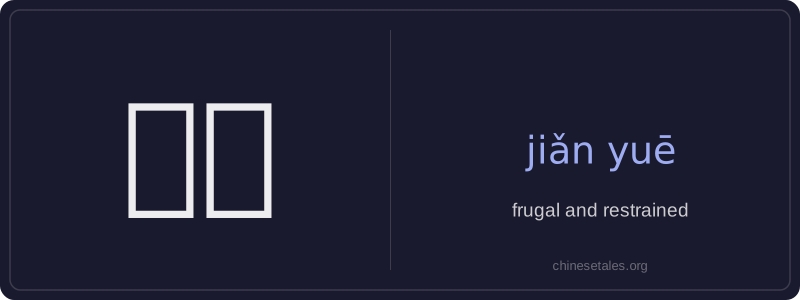
俭约 (jiǎn yuē) is an adjective meaning 'frugal and restrained'—emphasizing both careful use of resources and self-discipline in consumption. The first character 俭 means 'frugal' or 'economical', often implying thriftiness with money, food, or energy. The second character 约 means 'to restrain', 'to moderate', or 'to curtail', suggesting conscious limitation of excess. Together, 俭约 conveys a balanced, principled approach to living—not merely saving money, but avoiding waste and cultivating modesty in lifestyle and desires.
This term carries a positive, somewhat formal or literary tone and is commonly used in moral education, family values discussions, and official guidance on sustainable living. It appears frequently in classical texts and modern policy documents promoting low-carbon lifestyles or anti-corruption campaigns. While it can describe individuals, households, or institutions, it’s rarely used in casual speech—it sounds more deliberate and virtuous than everyday words like 节约 (jié yuē, 'to conserve').
Example Sentences
Related Words
国语
‘Guó yǔ’ literally means 'national language'—
无论谁
‘无论谁’ (wú lùn shéi) is a pronoun meaning
外语
‘外语’ literally means ‘outside language’ —
不对
不对 (bù duì) literally combines 不 (bù), meani
我的
我的 (wǒ de) is a possessive pronoun meaning 'my'
违规
违规 (wéi guī) literally means 'to violate rules
亲笔
‘亲笔’ literally means ‘one’s own hand’—comb
面条
‘面条’ (miàn tiáo) literally means ‘flour str