Word Explanation
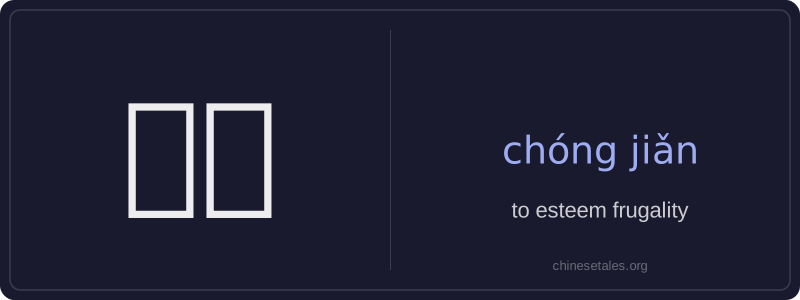
崇俭 (chóng jiǎn) is a classical Chinese compound verb meaning 'to esteem frugality' or 'to uphold thriftiness as a virtue.' The character 崇 (chóng) means 'to revere,' 'to honor,' or 'to hold in high esteem,' while 俭 (jiǎn) means 'frugal,' 'thrifty,' or 'economical.' Together, they express a moral stance—not merely practicing frugality, but actively valuing and promoting it as an ethical principle. This term appears frequently in Confucian texts, traditional family instructions, and modern public campaigns advocating sustainable living.
Though formal and slightly literary, 崇俭 remains current in written Chinese—especially in essays, editorials, and speeches about social values or environmental responsibility. It carries positive connotations of wisdom, self-discipline, and social consciousness. Unlike colloquial terms like 省钱 (shěng qián, 'to save money'), 崇俭 emphasizes intentionality and moral conviction rather than mere cost-cutting. It reflects a holistic attitude toward resource use, rooted in respect for labor, nature, and future generations.
Example Sentences
Related Words
国语
‘Guó yǔ’ literally means 'national language'—
无论谁
‘无论谁’ (wú lùn shéi) is a pronoun meaning
外语
‘外语’ literally means ‘outside language’ —
不对
不对 (bù duì) literally combines 不 (bù), meani
我的
我的 (wǒ de) is a possessive pronoun meaning 'my'
违规
违规 (wéi guī) literally means 'to violate rules
亲笔
‘亲笔’ literally means ‘one’s own hand’—comb
面条
‘面条’ (miàn tiáo) literally means ‘flour str