Word Explanation
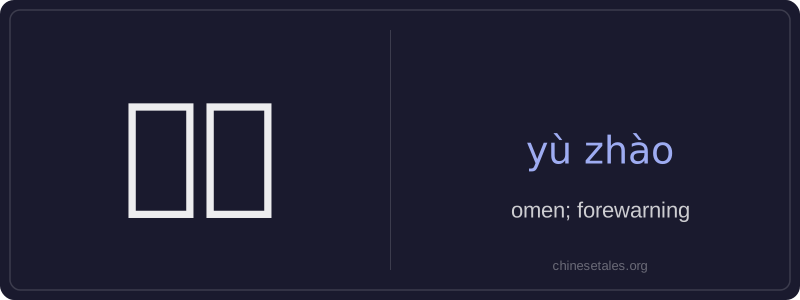
预兆 (yù zhào) is a noun meaning 'omen' or 'forewarning'—a sign that something, often significant or momentous, is about to happen. The first character 预 (yù) means 'in advance' or 'beforehand', conveying anticipation; the second character 兆 (zhào) originally referred to cracks appearing in heated turtle shells during ancient divination, later broadening to mean 'portent' or 'sign'. Together, they emphasize a visible or perceptible signal preceding an event—often with connotations of inevitability or gravity.
This word appears frequently in literary, historical, and superstitious contexts: natural phenomena (e.g., unusual animal behavior), human actions (e.g., sudden political shifts), or even personal experiences (e.g., dreams or physical sensations). It carries a formal or slightly solemn tone and is rarely used in casual speech. While neutral in theory, 预兆 often implies something consequential—positive or negative—and is commonly paired with adjectives like 不祥 (bù xiáng, 'inauspicious') or 吉祥 (jí xiáng, 'auspicious').
Example Sentences
Related Words
国语
‘Guó yǔ’ literally means 'national language'—
无论谁
‘无论谁’ (wú lùn shéi) is a pronoun meaning
外语
‘外语’ literally means ‘outside language’ —
不对
不对 (bù duì) literally combines 不 (bù), meani
我的
我的 (wǒ de) is a possessive pronoun meaning 'my'
违规
违规 (wéi guī) literally means 'to violate rules
亲笔
‘亲笔’ literally means ‘one’s own hand’—comb
面条
‘面条’ (miàn tiáo) literally means ‘flour str