Word Explanation
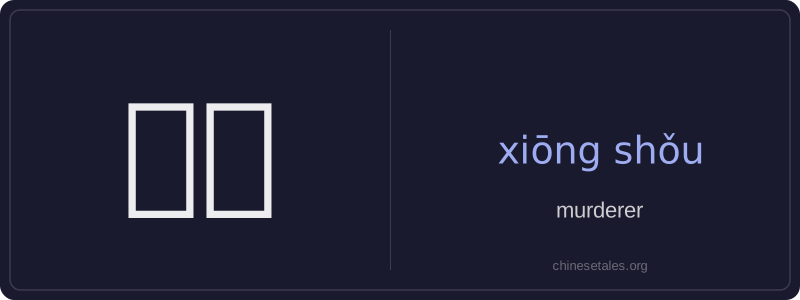
‘凶手’ literally combines ‘凶’ (xiōng), meaning ‘fierce’, ‘ferocious’, or ‘ominous’, and ‘手’ (shǒu), meaning ‘hand’ or ‘person who performs an action’. Together, they form a noun meaning ‘murderer’ — the person who commits murder. It carries strong negative connotation and is used almost exclusively in formal, legal, journalistic, or narrative contexts, not in casual speech.
The term emphasizes agency and culpability: it refers specifically to the individual directly responsible for a killing, not just anyone involved. Unlike more neutral terms like ‘嫌疑人’ (suspect), ‘凶手’ presumes guilt and is often used after conviction or when evidence strongly points to one person. It appears frequently in crime reports, detective fiction, court proceedings, and historical accounts of violent incidents.
Example Sentences
Related Words
国语
‘Guó yǔ’ literally means 'national language'—
无论谁
‘无论谁’ (wú lùn shéi) is a pronoun meaning
外语
‘外语’ literally means ‘outside language’ —
不对
不对 (bù duì) literally combines 不 (bù), meani
我的
我的 (wǒ de) is a possessive pronoun meaning 'my'
违规
违规 (wéi guī) literally means 'to violate rules
亲笔
‘亲笔’ literally means ‘one’s own hand’—comb
面条
‘面条’ (miàn tiáo) literally means ‘flour str