Word Explanation
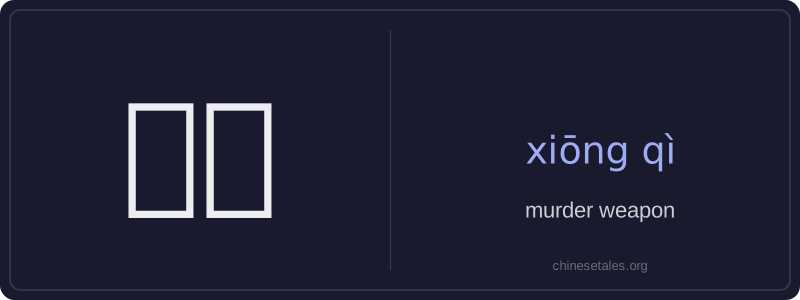
凶器 (xiōng qì) literally combines 凶 (xiōng), meaning 'fierce', 'violent', or 'ominous', and 器 (qì), meaning 'tool' or 'instrument'. Together, they form a formal, legal term referring specifically to an object used to commit homicide or serious bodily harm — not just any weapon, but one employed in a murder or attempted murder. It carries strong forensic and judicial connotations and appears frequently in police reports, court proceedings, and crime-related news.
The word is neutral in tone but highly context-sensitive: it implies criminal intent and lethality, so it’s rarely used casually or figuratively. Unlike general terms like 武器 (wǔqì, 'weapon') or 兵器 (bīngqì, 'armament'), 凶器 always points to the object’s role in a violent crime — for example, a knife used in a killing becomes a 凶器, whereas the same knife in a kitchen is not. Its usage underscores legal accountability and evidentiary significance.
Example Sentences
Related Words
国语
‘Guó yǔ’ literally means 'national language'—
无论谁
‘无论谁’ (wú lùn shéi) is a pronoun meaning
外语
‘外语’ literally means ‘outside language’ —
不对
不对 (bù duì) literally combines 不 (bù), meani
我的
我的 (wǒ de) is a possessive pronoun meaning 'my'
违规
违规 (wéi guī) literally means 'to violate rules
亲笔
‘亲笔’ literally means ‘one’s own hand’—comb
面条
‘面条’ (miàn tiáo) literally means ‘flour str