Word Explanation
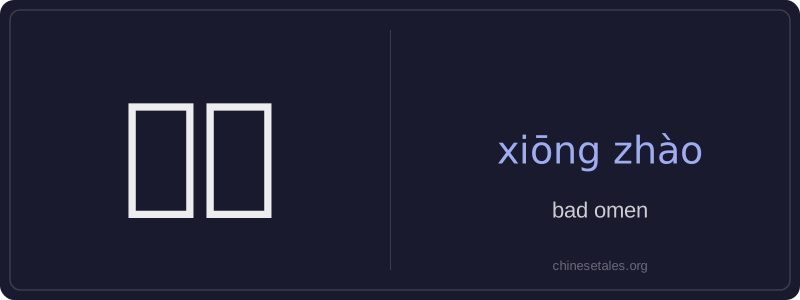
凶兆 literally means 'ominous sign' — 凶 (xiōng) means 'fierce', 'dangerous', or 'inauspicious', and 兆 (zhào) means 'omen', 'portent', or 'sign'. Together, they form a formal, literary noun meaning 'bad omen' — a warning sign believed to predict misfortune, disaster, or failure. It’s often used in contexts involving superstition, folklore, literature, or dramatic storytelling.
The term carries strong connotations of foreboding and is rarely used in casual daily speech. You’ll commonly encounter it in classical texts, historical narratives, news commentary about crises (e.g., economic collapse or natural disasters), or when describing unusual animal behavior interpreted as a warning — such as crows gathering at dusk or snakes appearing in villages before earthquakes. While not scientifically grounded, 凶兆 reflects deep-rooted cultural associations between natural phenomena and human fate.
Example Sentences
Related Words
国语
‘Guó yǔ’ literally means 'national language'—
无论谁
‘无论谁’ (wú lùn shéi) is a pronoun meaning
外语
‘外语’ literally means ‘outside language’ —
不对
不对 (bù duì) literally combines 不 (bù), meani
我的
我的 (wǒ de) is a possessive pronoun meaning 'my'
违规
违规 (wéi guī) literally means 'to violate rules
亲笔
‘亲笔’ literally means ‘one’s own hand’—comb
面条
‘面条’ (miàn tiáo) literally means ‘flour str