Word Explanation
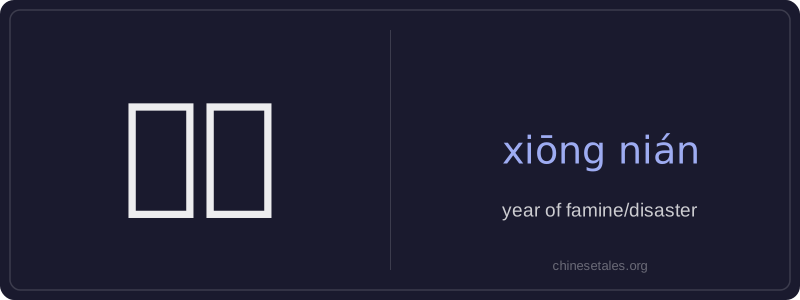
‘凶年’ literally combines ‘凶’ (xiōng), meaning ‘ominous,’ ‘inauspicious,’ or ‘disastrous,’ and ‘年’ (nián), meaning ‘year.’ Together, it refers to a year marked by severe hardship—most commonly widespread crop failure, famine, drought, flood, or other natural disasters that cause mass suffering and economic collapse. Historically, this term appears frequently in classical Chinese texts and official records to denote years of exceptional calamity.
In modern usage, ‘凶年’ carries a formal, literary, or historical tone—it is rarely used in casual speech or news headlines today (where terms like ‘灾年’ or descriptive phrases such as ‘粮食歉收的年份’ are more common). It evokes gravity and solemnity, often appearing in academic writing, historical narratives, or literary works reflecting on societal vulnerability and resilience in the face of catastrophe.
Example Sentences
Related Words
国语
‘Guó yǔ’ literally means 'national language'—
无论谁
‘无论谁’ (wú lùn shéi) is a pronoun meaning
外语
‘外语’ literally means ‘outside language’ —
不对
不对 (bù duì) literally combines 不 (bù), meani
我的
我的 (wǒ de) is a possessive pronoun meaning 'my'
违规
违规 (wéi guī) literally means 'to violate rules
亲笔
‘亲笔’ literally means ‘one’s own hand’—comb
面条
‘面条’ (miàn tiáo) literally means ‘flour str