Word Explanation
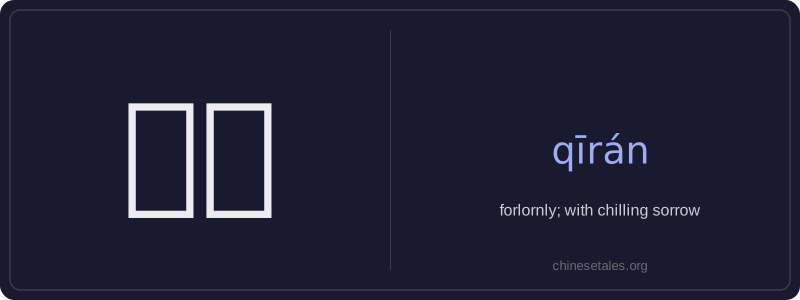
‘凄然’ is an adverb meaning ‘forlornly’ or ‘with chilling sorrow’ — it conveys a quiet, deeply felt sadness that often carries a sense of loneliness, desolation, or poignant regret. The first character 凄 (qī) means ‘miserable’, ‘bleak’, or ‘chilling’, evoking coldness and emotional barrenness; the second character 然 (rán) is a classical suffix meaning ‘in the manner of’, turning the preceding adjective into an adverbial phrase. Together, they describe how an action or expression is carried out — not with loud grief, but with subdued, haunting sorrow.
This word appears frequently in literary Chinese, poetry, and formal writing, especially when depicting silent tears, wistful glances, or melancholy reflections on loss, parting, or faded beauty. It’s rarely used in casual speech, and almost never to describe physical conditions (e.g., weather or objects) without emotional projection. Its tone is refined and somber, often implying dignity amid sorrow rather than despair.
Example Sentences
Related Words
国语
‘Guó yǔ’ literally means 'national language'—
无论谁
‘无论谁’ (wú lùn shéi) is a pronoun meaning
外语
‘外语’ literally means ‘outside language’ —
不对
不对 (bù duì) literally combines 不 (bù), meani
我的
我的 (wǒ de) is a possessive pronoun meaning 'my'
违规
违规 (wéi guī) literally means 'to violate rules
亲笔
‘亲笔’ literally means ‘one’s own hand’—comb
面条
‘面条’ (miàn tiáo) literally means ‘flour str