Word Explanation
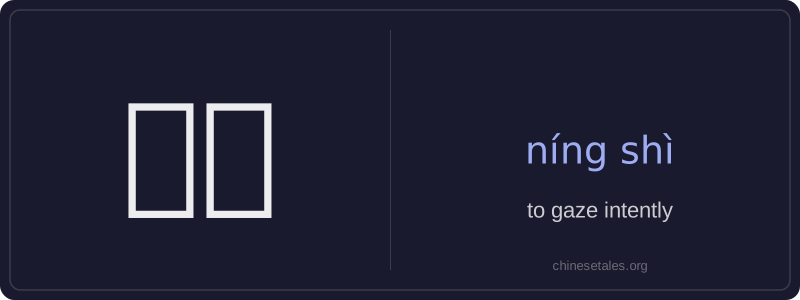
‘凝视’ is a verb meaning ‘to gaze intently’ or ‘to stare fixedly’, often with deep focus, emotion, or contemplation. The first character 凝 (níng) means ‘to congeal’, ‘to concentrate’, or ‘to fix in place’, suggesting mental or visual stillness; the second character 视 (shì) means ‘to look’ or ‘to see’. Together, they convey not just looking, but holding one’s gaze steadily—often reflecting curiosity, affection, awe, sorrow, or quiet absorption. It implies duration and intensity, unlike casual glancing.
This word appears frequently in literary, descriptive, or emotionally nuanced contexts—such as novels, poetry, film subtitles, or thoughtful narration. It’s rarely used in casual speech; instead, learners will encounter it in written descriptions of people observing something meaningful: a loved one, a distant landscape, an artwork, or a moment of personal significance. While neutral in tone, it carries subtle emotional weight and is seldom used for mundane or fleeting looks.
Example Sentences
Related Words
国语
‘Guó yǔ’ literally means 'national language'—
无论谁
‘无论谁’ (wú lùn shéi) is a pronoun meaning
外语
‘外语’ literally means ‘outside language’ —
不对
不对 (bù duì) literally combines 不 (bù), meani
我的
我的 (wǒ de) is a possessive pronoun meaning 'my'
违规
违规 (wéi guī) literally means 'to violate rules
亲笔
‘亲笔’ literally means ‘one’s own hand’—comb
面条
‘面条’ (miàn tiáo) literally means ‘flour str