Word Explanation
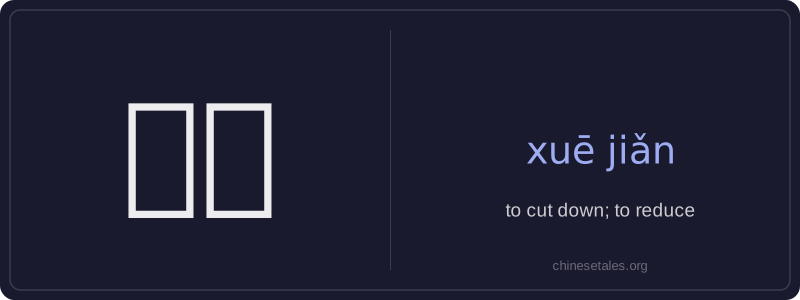
削减 (xuē jiǎn) is a transitive verb meaning 'to cut down' or 'to reduce', typically used for quantities, budgets, staff, resources, or abstract things like risks or emissions. It combines 削 (xuē), which means 'to pare away' or 'to whittle down', and 减 (jiǎn), meaning 'to decrease' or 'to subtract'. Together, they form a compound emphasizing deliberate, often formal or systematic reduction — not casual or temporary diminishment.
This word appears frequently in official, economic, medical, and environmental contexts: governments announce budget cuts, hospitals reduce staffing, and public health campaigns aim to cut down sugar intake. It carries a neutral-to-formal register and implies intentionality and measurable impact. Unlike more colloquial terms like 少一点 (shǎo yīdiǎn), 削减 suggests structured, policy-level action and is rarely used for personal, emotional, or physical changes (e.g., you wouldn’t say 削减体重; use 减少 or 减轻 instead).
Example Sentences
Related Words
国语
‘Guó yǔ’ literally means 'national language'—
无论谁
‘无论谁’ (wú lùn shéi) is a pronoun meaning
外语
‘外语’ literally means ‘outside language’ —
不对
不对 (bù duì) literally combines 不 (bù), meani
我的
我的 (wǒ de) is a possessive pronoun meaning 'my'
违规
违规 (wéi guī) literally means 'to violate rules
亲笔
‘亲笔’ literally means ‘one’s own hand’—comb
面条
‘面条’ (miàn tiáo) literally means ‘flour str