Word Explanation
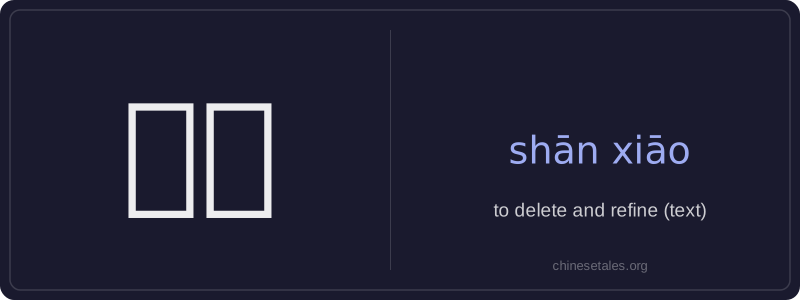
删削 (shān xiāo) is a formal literary verb meaning 'to delete and refine text' — it combines 删 (shān), 'to delete or remove', and 削 (xiāo), 'to pare down or trim', suggesting both removal of unnecessary parts and careful polishing for concision and elegance. Unlike simple deletion (e.g., 删除), 删削 implies an intentional, skillful editing process aimed at improving stylistic quality, often in writing, publishing, or academic revision.
This term is commonly used in contexts involving manuscript preparation, editorial work, historical text restoration, or literary criticism. It carries a connotation of scholarly rigor and aesthetic judgment — the editor doesn’t just cut content but reshapes it thoughtfully. While modern everyday speech favors simpler terms like 修改 (revise) or 删掉 (delete), 删削 appears frequently in formal writing, publishing guidelines, and discussions about classical or professional writing standards.
Example Sentences
Related Words
国语
‘Guó yǔ’ literally means 'national language'—
无论谁
‘无论谁’ (wú lùn shéi) is a pronoun meaning
外语
‘外语’ literally means ‘outside language’ —
不对
不对 (bù duì) literally combines 不 (bù), meani
我的
我的 (wǒ de) is a possessive pronoun meaning 'my'
违规
违规 (wéi guī) literally means 'to violate rules
亲笔
‘亲笔’ literally means ‘one’s own hand’—comb
面条
‘面条’ (miàn tiáo) literally means ‘flour str