Word Explanation
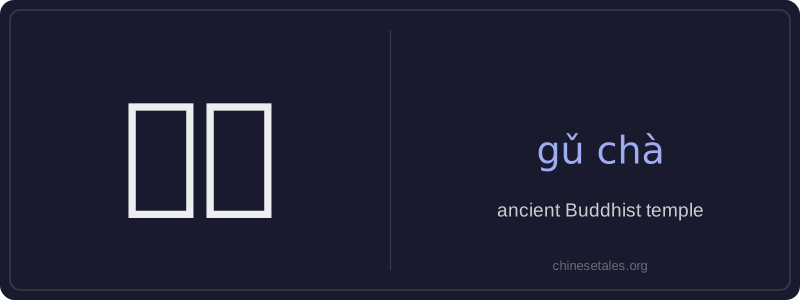
古刹 (gǔ chà) literally combines 古 (gǔ), meaning 'ancient' or 'old', and 刹 (chà), an abbreviation of 刹那 (chànà) originally from Sanskrit but used in Chinese Buddhist terminology to mean 'temple' or 'monastery'. Though 刹 alone is rare in modern speech, in this compound it carries the formal, literary sense of a Buddhist temple—especially one with historical significance. The term evokes age, solemnity, and spiritual heritage.
古刹 is used almost exclusively in written or elevated spoken contexts—such as travel writing, historical descriptions, poetry, or cultural commentary. It’s not used for ordinary or newly built temples; instead, it highlights temples that are centuries old, often nestled in mountains or forests, with weathered architecture and deep ties to Chan (Zen) or other traditional schools. It conveys reverence and timelessness, not just physical age.
Example Sentences
Related Words
国语
‘Guó yǔ’ literally means 'national language'—
无论谁
‘无论谁’ (wú lùn shéi) is a pronoun meaning
外语
‘外语’ literally means ‘outside language’ —
不对
不对 (bù duì) literally combines 不 (bù), meani
我的
我的 (wǒ de) is a possessive pronoun meaning 'my'
违规
违规 (wéi guī) literally means 'to violate rules
亲笔
‘亲笔’ literally means ‘one’s own hand’—comb
面条
‘面条’ (miàn tiáo) literally means ‘flour str