Word Explanation
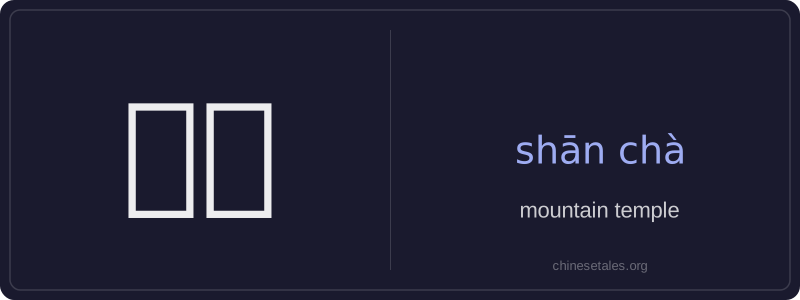
‘山刹’ (shān chà) literally means ‘mountain temple’ — a compound noun formed by combining 山 (shān), meaning ‘mountain’, and 刹 (chà), an elegant, literary term for ‘Buddhist temple’ or ‘monastery’. Though 刹 originally referred to the stupa or banner atop a temple, it evolved in classical Chinese poetry and prose to denote temples themselves, especially those nestled in remote mountainous areas. The word evokes serenity, seclusion, and spiritual cultivation.
‘山刹’ is not used in everyday spoken Mandarin; it appears mainly in literary texts, historical descriptions, travel writing, or poetic contexts. It carries a refined, slightly archaic tone and often suggests ancient, quiet temples surrounded by nature — distinct from modern urban temples or generic terms like 寺庙 (sìmiào). Learners should recognize it as a stylistic choice rather than a common vocabulary item for daily conversation.
Example Sentences
Related Words
国语
‘Guó yǔ’ literally means 'national language'—
无论谁
‘无论谁’ (wú lùn shéi) is a pronoun meaning
外语
‘外语’ literally means ‘outside language’ —
不对
不对 (bù duì) literally combines 不 (bù), meani
我的
我的 (wǒ de) is a possessive pronoun meaning 'my'
违规
违规 (wéi guī) literally means 'to violate rules
亲笔
‘亲笔’ literally means ‘one’s own hand’—comb
面条
‘面条’ (miàn tiáo) literally means ‘flour str