Word Explanation
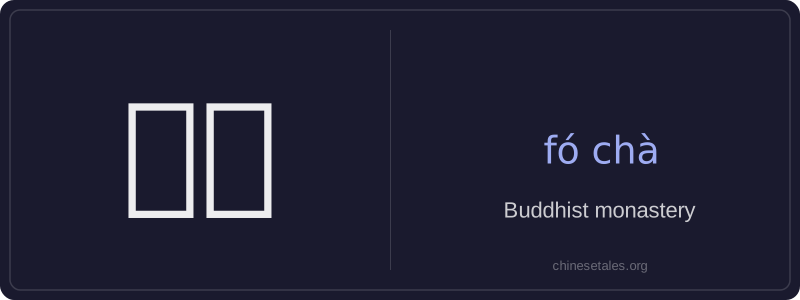
佛刹 (fó chà) literally combines 佛 (fó), meaning 'Buddha' or 'Buddhist', and 刹 (chà), an ancient Sanskrit loanword originally meaning 'moment' but used in Buddhist Chinese to denote a monastery, temple compound, or sacred site. Together, 佛刹 refers specifically to a Buddhist monastery — a place of worship, monastic residence, and religious practice. It carries a formal, literary, and somewhat classical tone, often appearing in historical texts, poetry, or formal descriptions of religious architecture.
Unlike the more common and colloquial term 寺庙 (sìmiào) or simply 寺 (sì), 佛刹 emphasizes the institution’s spiritual function and traditional lineage. It is frequently used in contexts highlighting cultural heritage, scenic mountain temples, or scholarly discussions of Buddhism in China. You’ll encounter it in travel writing about historic sites like Mount Emei or in inscriptions on temple gates — never in casual speech or modern administrative documents.
Example Sentences
Related Words
国语
‘Guó yǔ’ literally means 'national language'—
无论谁
‘无论谁’ (wú lùn shéi) is a pronoun meaning
外语
‘外语’ literally means ‘outside language’ —
不对
不对 (bù duì) literally combines 不 (bù), meani
我的
我的 (wǒ de) is a possessive pronoun meaning 'my'
违规
违规 (wéi guī) literally means 'to violate rules
亲笔
‘亲笔’ literally means ‘one’s own hand’—comb
面条
‘面条’ (miàn tiáo) literally means ‘flour str