Word Explanation
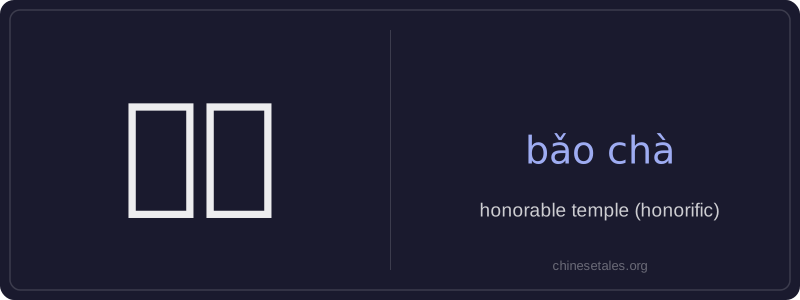
‘宝刹’ is a respectful, literary term for a Buddhist temple, used especially when addressing or referring to a temple with reverence—often in formal speech, writing, or when visiting. The character 宝 (bǎo) means 'treasure' or 'precious', conveying value and sanctity; 刹 (chà) originally refers to a Buddhist monastery or the momentary duration of a thought, but here functions as a classical suffix for temples, derived from Sanskrit 'kṣetra' (sacred place). Together, 宝刹 literally suggests 'treasured sacred site', elevating the temple beyond ordinary architecture to a spiritually significant location.
This term is never used for secular buildings or non-Buddhist religious sites. It appears frequently in poetry, travel essays, temple inscriptions, and polite conversation—especially when speaking to monks or elders. While modern spoken Chinese often uses simpler terms like 寺庙 (sìmiào), 宝刹 retains ceremonial weight and is common in formal invitations, guidebooks, and historical narratives about monastic culture.
Example Sentences
Related Words
国语
‘Guó yǔ’ literally means 'national language'—
无论谁
‘无论谁’ (wú lùn shéi) is a pronoun meaning
外语
‘外语’ literally means ‘outside language’ —
不对
不对 (bù duì) literally combines 不 (bù), meani
我的
我的 (wǒ de) is a possessive pronoun meaning 'my'
违规
违规 (wéi guī) literally means 'to violate rules
亲笔
‘亲笔’ literally means ‘one’s own hand’—comb
面条
‘面条’ (miàn tiáo) literally means ‘flour str