Word Explanation
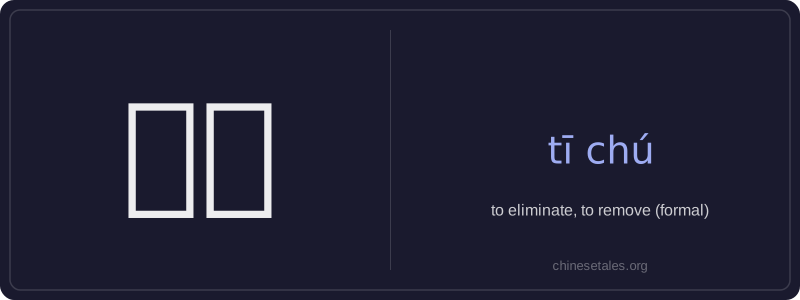
'剔除' (tī chú) is a formal, transitive verb meaning 'to eliminate' or 'to remove'—especially something undesirable, unnecessary, or harmful from a larger set, system, or body. The character 剔 (tī) originally means 'to pick out carefully with a sharp tool', evoking precision and selectivity; 除 (chú) means 'to remove' or 'to get rid of', often with a sense of thoroughness or finality. Together, they emphasize deliberate, often systematic removal—not casual deletion, but purposeful excision.
This word appears frequently in official, medical, technical, or administrative contexts: removing faulty components from machinery, eliminating pathogens in sterilization procedures, deleting invalid data from databases, or expelling members from an organization for violating rules. It carries a neutral-to-negative connotation, implying the target is unwelcome or incompatible. While it can be used in everyday speech, it sounds more formal than common alternatives like 删除 (shānchú) or 去掉 (qùdiào).
Example Sentences
Related Words
国语
‘Guó yǔ’ literally means 'national language'—
无论谁
‘无论谁’ (wú lùn shéi) is a pronoun meaning
外语
‘外语’ literally means ‘outside language’ —
不对
不对 (bù duì) literally combines 不 (bù), meani
我的
我的 (wǒ de) is a possessive pronoun meaning 'my'
违规
违规 (wéi guī) literally means 'to violate rules
亲笔
‘亲笔’ literally means ‘one’s own hand’—comb
面条
‘面条’ (miàn tiáo) literally means ‘flour str