Word Explanation
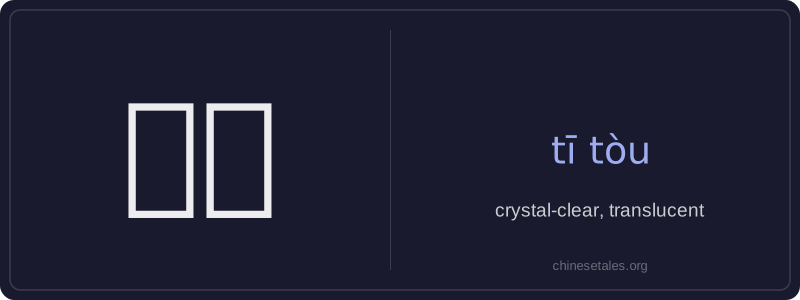
剔透 (tī tòu) is an elegant, literary adjective meaning 'crystal-clear' or 'translucent'—describing something so pure and transparent that light passes through it unimpeded, like flawless ice, fine jade, or dewdrops on a spiderweb. The first character 剔 (tī) originally means 'to carve away impurities' or 'to pick out', suggesting refinement and removal of flaws; the second character 透 (tòu) means 'to penetrate' or 'to be thoroughly visible', implying complete transparency. Together, they evoke an image of pristine clarity achieved through careful purification.
This word is commonly used to describe natural phenomena (e.g., frost, water, gemstones), refined materials (e.g., glassware, porcelain), or even abstract qualities like 'a剔透 mind' (a lucid, unclouded intellect). It carries a poetic, slightly formal tone and appears frequently in descriptive writing, classical poetry adaptations, and high-end product descriptions—not in casual speech. While often paired with nouns like 水 (water), 冰 (ice), or 心 (heart), it functions as a standalone attributive adjective before the noun.
Example Sentences
Related Words
国语
‘Guó yǔ’ literally means 'national language'—
无论谁
‘无论谁’ (wú lùn shéi) is a pronoun meaning
外语
‘外语’ literally means ‘outside language’ —
不对
不对 (bù duì) literally combines 不 (bù), meani
我的
我的 (wǒ de) is a possessive pronoun meaning 'my'
违规
违规 (wéi guī) literally means 'to violate rules
亲笔
‘亲笔’ literally means ‘one’s own hand’—comb
面条
‘面条’ (miàn tiáo) literally means ‘flour str