Word Explanation
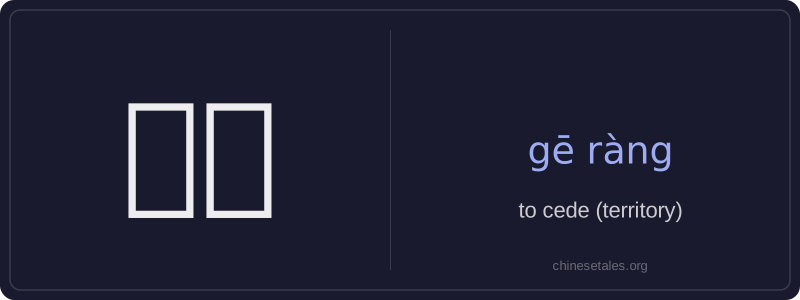
'割让' (gē ràng) is a formal verb meaning 'to cede' — specifically, to formally surrender territory, sovereignty, or rights to another country or authority, usually through a treaty or diplomatic agreement. The character 割 (gē) means 'to cut' or 'to sever', evoking the idea of physically separating land; 让 (ràng) means 'to yield', 'to give up', or 'to relinquish'. Together, they convey the deliberate, often involuntary, act of cutting away and handing over part of one's domain.
This term appears almost exclusively in historical, political, or legal contexts — for example, when describing territorial losses after wars or unequal treaties. It carries strong connotations of national loss, injustice, or geopolitical pressure, and is rarely used for personal or everyday transfers. Because of its gravity and formality, it does not collocate with casual subjects like individuals or companies; the subject is typically a state, government, or sovereign entity.
Example Sentences
Related Words
国语
‘Guó yǔ’ literally means 'national language'—
无论谁
‘无论谁’ (wú lùn shéi) is a pronoun meaning
外语
‘外语’ literally means ‘outside language’ —
不对
不对 (bù duì) literally combines 不 (bù), meani
我的
我的 (wǒ de) is a possessive pronoun meaning 'my'
违规
违规 (wéi guī) literally means 'to violate rules
亲笔
‘亲笔’ literally means ‘one’s own hand’—comb
面条
‘面条’ (miàn tiáo) literally means ‘flour str