Word Explanation
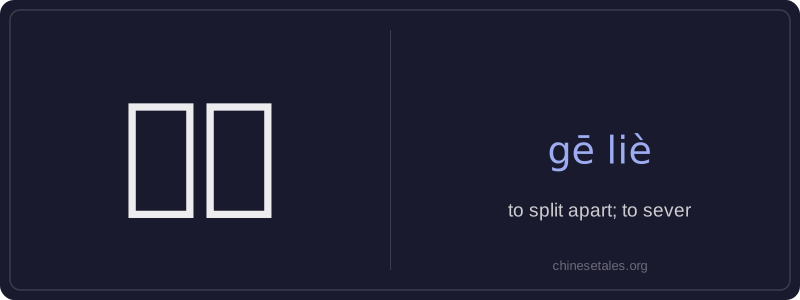
割裂 (gē liè) literally combines 割 (to cut, to sever) and 裂 (to split, to tear), conveying the idea of forcibly dividing something that was originally whole or connected. It emphasizes a sharp, often unnatural or damaging separation — not just physical cutting, but also metaphorical division, such as breaking up relationships, ideas, systems, or cultural continuity. The word carries a negative connotation, implying fragmentation that disrupts integrity or coherence.
It’s commonly used in formal, academic, or critical contexts — for example, when discussing social policy, historical interpretation, education reform, or philosophical thought. You’ll rarely hear it in casual speech; instead, it appears in essays, news analysis, or political discourse to highlight harmful disconnection — like separating theory from practice, or divorcing economic development from environmental protection. Its tone is serious and evaluative, often suggesting criticism of oversimplification or artificial boundaries.
Example Sentences
Related Words
国语
‘Guó yǔ’ literally means 'national language'—
无论谁
‘无论谁’ (wú lùn shéi) is a pronoun meaning
外语
‘外语’ literally means ‘outside language’ —
不对
不对 (bù duì) literally combines 不 (bù), meani
我的
我的 (wǒ de) is a possessive pronoun meaning 'my'
违规
违规 (wéi guī) literally means 'to violate rules
亲笔
‘亲笔’ literally means ‘one’s own hand’—comb
面条
‘面条’ (miàn tiáo) literally means ‘flour str