Word Explanation
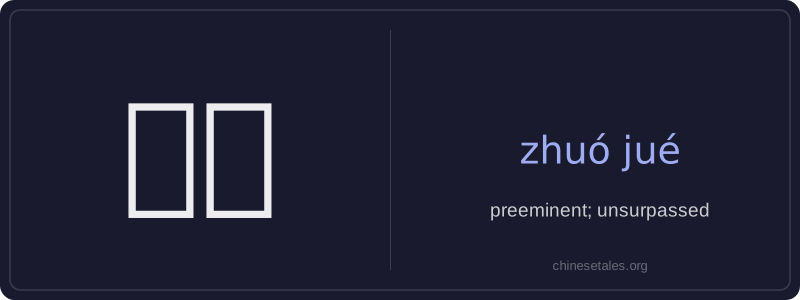
‘卓绝’ is an adjective meaning 'preeminent' or 'unsurpassed'—describing something or someone that stands far above ordinary standards in ability, achievement, or quality. The first character 卓 (zhuó) means 'outstanding' or 'eminent', often implying excellence and distinction; the second character 绝 (jué) means 'absolute' or 'unparalleled', suggesting there is no equal or comparison. Together, they form a strong, formal compound emphasizing extraordinary superiority.
This word is commonly used in written Chinese and formal speech—especially when praising exceptional talent, heroic efforts, or rare accomplishments. It frequently modifies nouns like 才能 (cái néng, 'talent'), 努力 (nǔ lì, 'effort'), or 成就 (chéng jiù, 'achievement'). Because of its elevated tone, 卓绝 is rarely used in casual conversation and seldom appears in everyday descriptions of routine matters—it carries weight and admiration.
Example Sentences
Related Words
国语
‘Guó yǔ’ literally means 'national language'—
无论谁
‘无论谁’ (wú lùn shéi) is a pronoun meaning
外语
‘外语’ literally means ‘outside language’ —
不对
不对 (bù duì) literally combines 不 (bù), meani
我的
我的 (wǒ de) is a possessive pronoun meaning 'my'
违规
违规 (wéi guī) literally means 'to violate rules
亲笔
‘亲笔’ literally means ‘one’s own hand’—comb
面条
‘面条’ (miàn tiáo) literally means ‘flour str