Word Explanation
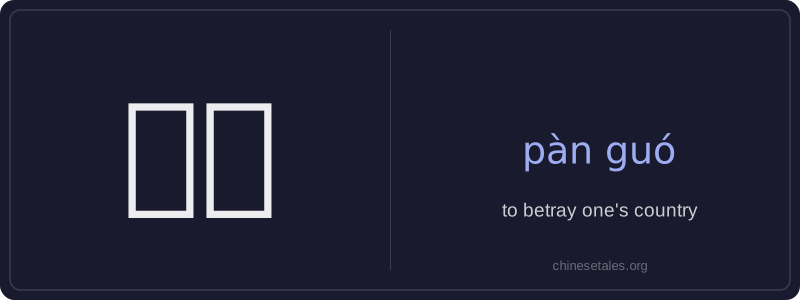
叛国 (pàn guó) literally means 'to rebel against the country' — combining 叛 (pàn), meaning 'to betray' or 'to revolt', and 国 (guó), meaning 'country' or 'state'. It refers specifically to acts of treason: deliberately aiding an enemy, leaking state secrets, or attempting to overthrow one’s own government. This is a serious legal and moral offense in Chinese law and society, carrying severe penalties.
The term carries strong negative connotations and is used formally in legal, historical, and political contexts — not in casual speech. It often appears in news reports about espionage, wartime collaboration, or high-profile security cases. While 叛 alone can describe personal betrayal (e.g., 叛友 'betray a friend'), 叛国 exclusively denotes betrayal of the nation-state, emphasizing loyalty to sovereignty and constitutional order.
Example Sentences
Related Words
国语
‘Guó yǔ’ literally means 'national language'—
无论谁
‘无论谁’ (wú lùn shéi) is a pronoun meaning
外语
‘外语’ literally means ‘outside language’ —
不对
不对 (bù duì) literally combines 不 (bù), meani
我的
我的 (wǒ de) is a possessive pronoun meaning 'my'
违规
违规 (wéi guī) literally means 'to violate rules
亲笔
‘亲笔’ literally means ‘one’s own hand’—comb
面条
‘面条’ (miàn tiáo) literally means ‘flour str