Word Explanation
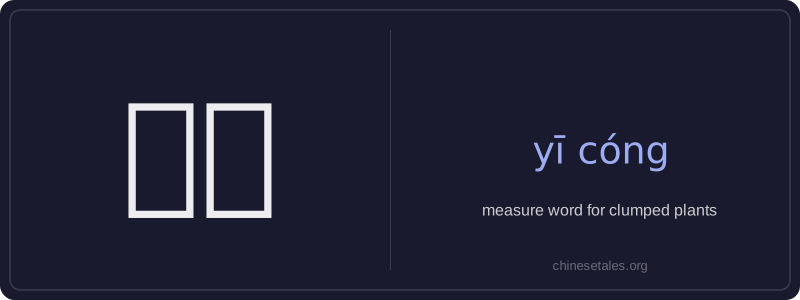
‘一丛’ is a measure word used specifically for plants that grow in dense, clustered groups—such as bamboo shoots, reeds, grasses, or flowering shrubs. The first character ‘一’ means ‘one’, functioning here as the numeral, while ‘丛’ literally means ‘thicket’, ‘clump’, or ‘dense growth’, emphasizing the natural, tangled, multi-stemmed arrangement of the plants. Together, ‘一丛’ conveys not just quantity but also visual and ecological texture: it implies organic grouping, rootedness, and proximity, rather than isolated or evenly spaced individuals.
This measure word is commonly used in descriptive writing, nature observation, and everyday speech when referring to wild or cultivated plant clusters. It’s rarely used for single-stemmed plants (e.g., a lone tree) or non-plant nouns—even though ‘丛’ can occasionally appear in metaphorical expressions like ‘一丛笑声’ (a burst of laughter), such usage is literary and uncommon. Learners should reserve ‘一丛’ primarily for botanical contexts involving clumped vegetation.
Example Sentences
Related Words
国语
‘Guó yǔ’ literally means 'national language'—
无论谁
‘无论谁’ (wú lùn shéi) is a pronoun meaning
外语
‘外语’ literally means ‘outside language’ —
不对
不对 (bù duì) literally combines 不 (bù), meani
我的
我的 (wǒ de) is a possessive pronoun meaning 'my'
违规
违规 (wéi guī) literally means 'to violate rules
亲笔
‘亲笔’ literally means ‘one’s own hand’—comb
面条
‘面条’ (miàn tiáo) literally means ‘flour str