Word Explanation
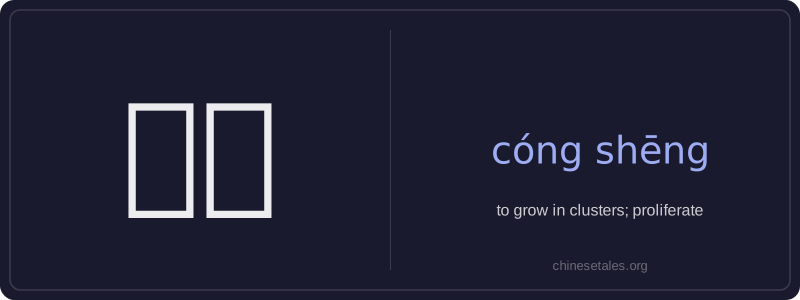
'丛生' (cóng shēng) is a verb meaning 'to grow in dense clusters or thick patches,' often describing plants, fungi, or even abstract phenomena like problems or rumors that multiply rapidly and uncontrollably. The first character 丛 (cóng) means 'thicket,' 'cluster,' or 'group,' evoking tightly packed, overlapping growth; the second character 生 (shēng) means 'to grow' or 'to be born.' Together, they emphasize natural, often unchecked proliferation—typically without human intervention—and carry a neutral-to-slightly-negative connotation when applied to undesirable things.
This term appears frequently in ecological, agricultural, and literary contexts. It’s commonly used for weeds, bamboo shoots, moss, mushrooms, or invasive species, but also metaphorically—for example, '问题丛生' (problems proliferating). Unlike simple verbs like 长 (zhǎng, 'to grow'), 丛生 implies density, abundance, and organic interweaving—not just individual growth but collective, tangled emergence.
Example Sentences
Related Words
国语
‘Guó yǔ’ literally means 'national language'—
无论谁
‘无论谁’ (wú lùn shéi) is a pronoun meaning
外语
‘外语’ literally means ‘outside language’ —
不对
不对 (bù duì) literally combines 不 (bù), meani
我的
我的 (wǒ de) is a possessive pronoun meaning 'my'
违规
违规 (wéi guī) literally means 'to violate rules
亲笔
‘亲笔’ literally means ‘one’s own hand’—comb
面条
‘面条’ (miàn tiáo) literally means ‘flour str