Word Explanation
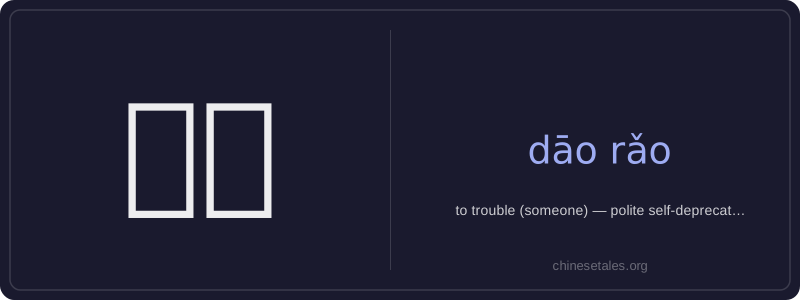
‘叨扰’ (dāo rǎo) is a modest, self-deprecating verb used to acknowledge that one has imposed on someone’s time, hospitality, or resources. Literally, 叨 (dāo) means ‘to chatter’ or ‘to nibble’ — historically evoking the image of repeatedly taking small bites, while 扰 (rǎo) means ‘to disturb’ or ‘to trouble’. Together, they convey the sense of ‘lightly but repeatedly troubling’ — softened by humility and social grace. It is never used to describe serious harm or offense, but rather everyday inconveniences like staying as a guest, asking for help, or receiving favors.
This expression belongs to formal or semi-formal register and appears frequently in spoken and written Chinese when expressing gratitude mixed with apology — especially upon leaving someone’s home, after receiving assistance, or at the end of an email or message. It reflects Confucian values of humility and reciprocity: by naming your own imposition, you affirm respect for the other person’s kindness and effort.
Example Sentences
Related Words
国语
‘Guó yǔ’ literally means 'national language'—
无论谁
‘无论谁’ (wú lùn shéi) is a pronoun meaning
外语
‘外语’ literally means ‘outside language’ —
不对
不对 (bù duì) literally combines 不 (bù), meani
我的
我的 (wǒ de) is a possessive pronoun meaning 'my'
违规
违规 (wéi guī) literally means 'to violate rules
亲笔
‘亲笔’ literally means ‘one’s own hand’—comb
面条
‘面条’ (miàn tiáo) literally means ‘flour str