Word Explanation
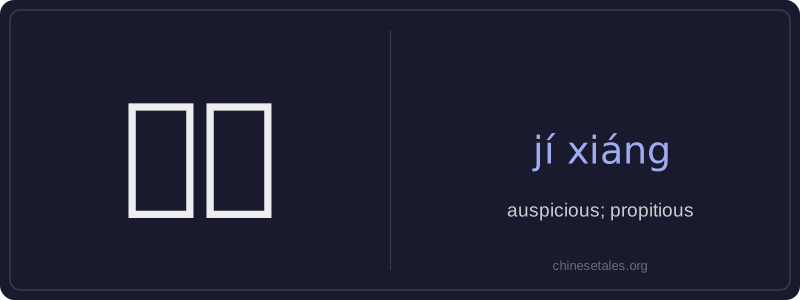
吉祥 (jí xiáng) is an adjective meaning 'auspicious' or 'propitious'—describing something that brings good fortune, blessings, or positive omens. The character 吉 (jí) means 'lucky' or 'fortunate', while 祥 (xiáng) conveys 'auspiciousness', 'harmony', or 'good omen'. Together, they form a classical compound emphasizing culturally rooted positivity, often associated with traditional celebrations, festivals, and symbolic imagery like dragons, phoenixes, bats (homophone for 'blessing'), or the qilin.
This term appears frequently in decorative contexts—on red paper cuts, New Year couplets, temple inscriptions, and auspicious animal motifs—where it expresses hopes for peace, prosperity, longevity, and family harmony. It’s rarely used in casual daily speech but remains deeply embedded in formal, ceremonial, and artistic language, especially during Lunar New Year or weddings. While it can modify nouns (e.g., 吉祥图案), it functions most naturally as a standalone descriptor in blessings or titles.
Example Sentences
Related Words
国语
‘Guó yǔ’ literally means 'national language'—
无论谁
‘无论谁’ (wú lùn shéi) is a pronoun meaning
外语
‘外语’ literally means ‘outside language’ —
不对
不对 (bù duì) literally combines 不 (bù), meani
我的
我的 (wǒ de) is a possessive pronoun meaning 'my'
违规
违规 (wéi guī) literally means 'to violate rules
亲笔
‘亲笔’ literally means ‘one’s own hand’—comb
面条
‘面条’ (miàn tiáo) literally means ‘flour str